
What are consultants advising clients to do about AI?
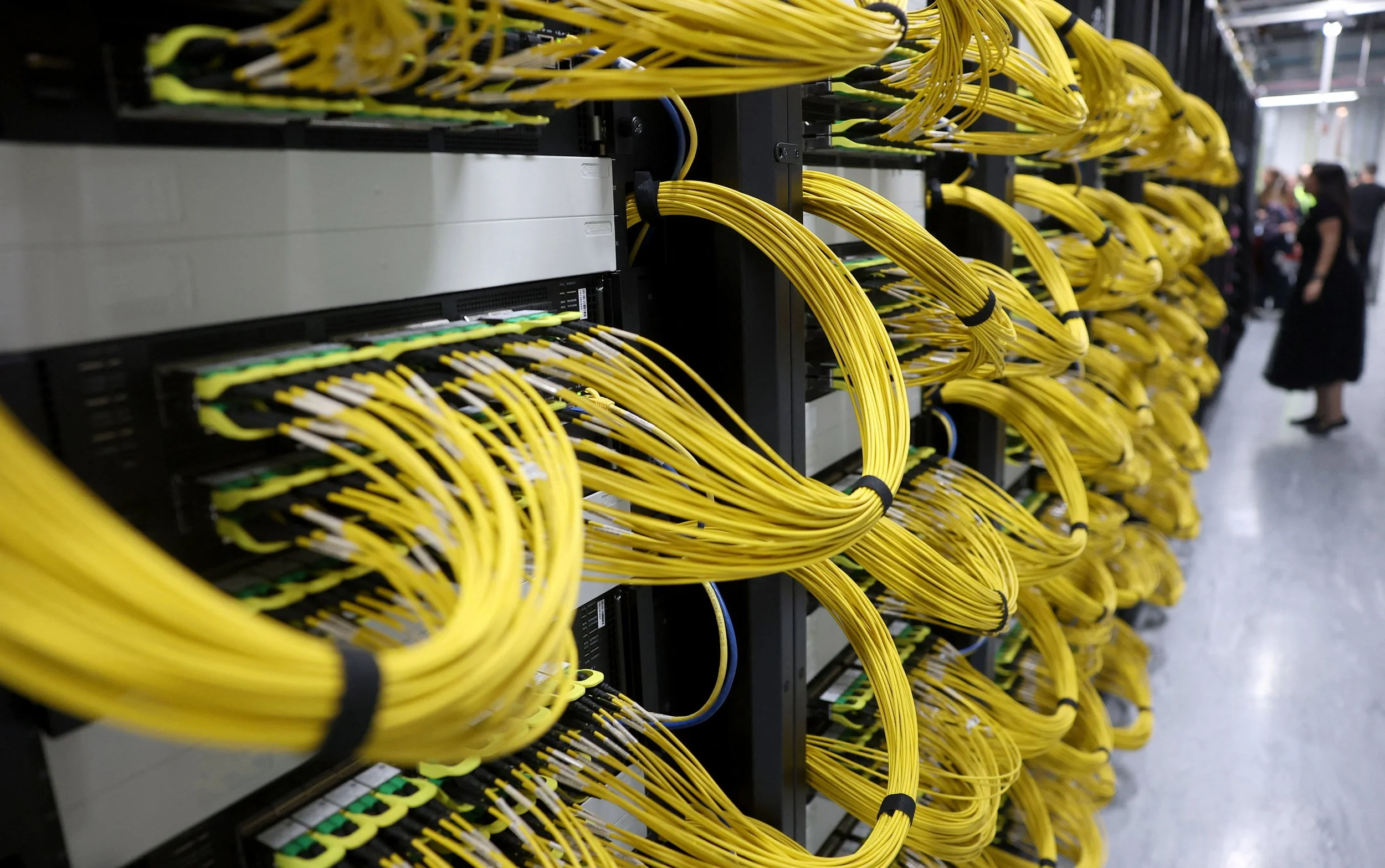
Some of the largest consultants in the market tell AOX what they are advising their clients to do to address market concentration in the US and the high valuations of tech stocks due to the AI boom (Reuters/Toby Melville)
Good morning. At the start of each calendar year it is common to speculate on what the coming 12 months have in store.
Here at AOX we are generally sceptical of investment outlooks. I for one have a distinct recollection of going to a large asset manager’s 2016 outlook to be told confidently that Trump and Brexit would never happen.
But one area we thought might be interesting to explore is specifically around the impact of AI on the US market. The S&P 500 had started 2026 much like it ended 2025: by going ever-skyward, powered by a handful of AI stocks such as Nvidia. (though it has gone off the boil a little in the past few weeks).
So we ask some of the largest consultants in the market, as 2026 gets under way, what they were recommending their clients do about it.
To cut to the chase, the consensus was “no”. The only exception was Aon, which said it was possible we were in a bubble but it was too early to tell.
So rather than focus on the reasons why and why not we might be in a bubble, we thought we’d pull out three key insights into what actions consultants are recommending their clients do about market concentration and the high valuations of US stocks
1) AI exposure doesn’t have to come from the US
Paul Gibney, investment partner at LCP, said history would suggest returns in the near future will be “lacklustre” given current valuations in the US.
He said: “We’re recommending clients review their overall equity allocations. That may well result in a lower US weighting.
“There may also be merit in looking east rather than west for many potential AI winners.
“China’s semiconductor technology may not yet be as sophisticated as that available to the US, but it still has significant AI players. China also has vast financial resources and, relative to the US, is installing the electricity generating capacity needed to power the AI boom much more quickly.”
Matt Tickle, chief investment officer at Barnett Waddingham, told AOX he was sceptical the US market would replicate its recent strong performance and said there was likely to be a reversion to the mean.
Tickle said: “Investors may want to consider ways to reduce their concentration in the large US tech stocks more from a risk management perspective.”
2) If you want AI exposure, it doesn’t have to come via Nvidia
Celia Dallas, chief investment strategist at Cambridge Associates, recommends asset owners achieve diversification by investing in the sectors that would benefit from the growth of AI rather than in AI companies themselves.
Dallas said: “The buildout of AI physical infrastructure is creating new opportunities in power generation, grid modernization, and energy efficiency.
“As data centers and AI workloads drive up electricity demand, companies focused on improving access to power—whether through renewables, grid upgrades, or distributed energy solutions—stand to benefit.
“Even if AI promises are delivered more slowly than anticipated, such investments would still benefit from other electricity demand drivers like electrification of transportation and digitalization trends.
“These segments are essential to the sustainable scaling of AI and may provide more stable, diversified returns than the core technology providers.”
3) The sky might not be falling in
Two of the largest consultants - Mercer and WTW - were the most bullish on the AI boom and they were both sceptical about whether US tech stocks were even particularly expensive.
Mercer said: “Many of these large companies are deeply embedded as platforms across multiple solutions for their customers, making it harder for them to be competed against, whilst AI enables toolkit expansion to support growth of existing customers, reducing the necessity to place greater emphasis on new customer acquisition.
“We believe AI is a tailwind that potentially deepens their moats because it enables them to better leverage their data, computer power and distribution, which in turn may further increase margins.
“Today’s market valuations are certainly expensive, but may not be as extreme or unsustainable as they seem on face value using traditional valuation metrics.”
Martin Jecks, senior director and multi-asset strategist at WTW, likewise said the growth of the magnificent seven was grounded in superior earnings performance.
