
Why Brazil’s wealthiest families shun investment abroad
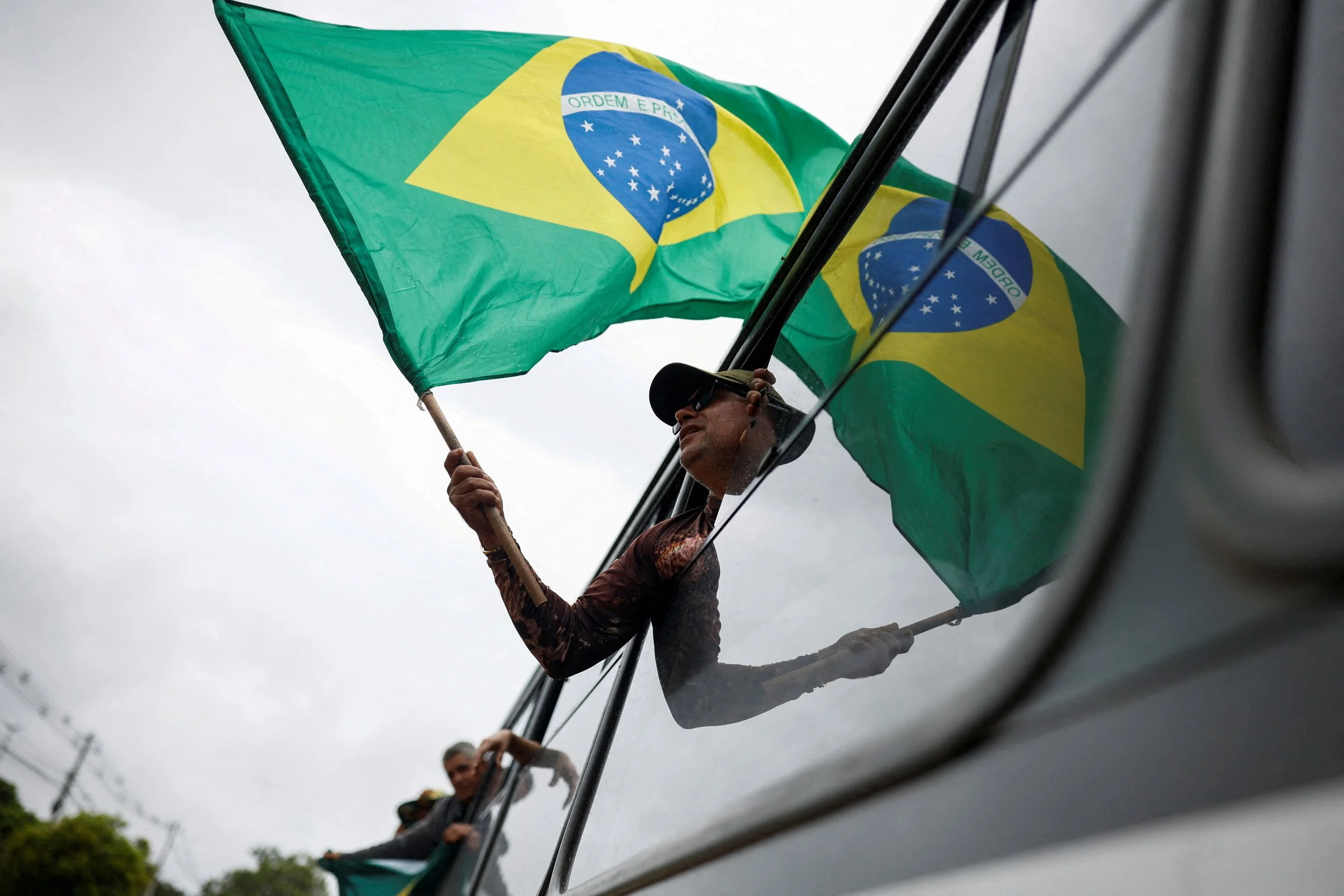
A potentially contentious election is looming in Brazil but the country’s wealthiest families are largely keeping their money invested domestically, according to the head of wealth management at BTG Pactual, Latin America’s largest investment bank (Reuters/Amanda Perobelli)
With the political risk of a contentious election looming, you might think Brazil’s wealthy families were sending their money straight out of the country.
But Rogério Pessoa, head of wealth management at BTG Pactual said the starting point for many Brazilian families remains domestic. “Most families are still very much in Brazil,” he said.
“With rates at 15 per cent, you can buy a bond from almost any Brazilian bank and get 90 per cent to 100 per cent of CDI, tax-exempt, it’s wonderful,” Pessoa said.
But BTG Pactual, which is the largest investment bank in Latin America with assets of $160bn, does encourage its clients to move some of their wealth offshore.
“We recommend a minimum of 30 per cent offshore,” Pessoa said, describing it as a structural diversification rule meant to persist through cycles, rather than a short-term call tied solely to the next Brazilian presidential election, which will happen at the end of this year.
Families with 50 per cent offshore or more are unusual in Brazil, Pessoa said, describing that profile as typically associated with investors long accustomed to US or European markets. By contrast he said a more common profile, particularly for families that generated liquidity more recently, would still hold the majority at home while building a smaller offshore sleeve.
Pessoa connected private wealth behavior to a broader shift in global portfolio construction.
In his telling, the US has historically earned a premium not only through growth, but through institutional stability. “A currency is strong because of economic strength, but also institutional strength,” he said, arguing that the US’s role at the center of global portfolios has been reinforced by confidence in how its institutions function.
He said that perception has come under pressure since Donald Trump returned to office, with tariff policy and geopolitics contributing to a change in how global investors think about concentration in US risk. “Investors have been moving away from US risk more because of institutional perception than economics,” Pessoa said, describing a process of incremental diversification rather than a wholesale exit.
Pessoa also framed US equity performance as unusually concentrated, arguing that the headline strength has been driven heavily by mega-cap technology rather than the broader market. The US, he said, has absorbed global liquidity for years, especially into tech, and he described that period with a line he returned to more than once. “The US was the big emerging market of the last five years,” he said, describing it as the primary destination for global liquidity during the prior cycle.
On monetary policy, Pessoa flagged Federal Reserve independence as a key variable for markets, particularly amid political pressure. “The Fed did what it had to do — it made three rate cuts,” he said, arguing that the Fed acted consistently with its mandate even as the administration pushed for faster easing. He also said US midterms later this year could influence whether the administration moderates or doubles down on its current approach, which, in his view, matters for global risk perception and the dollar.
Paulo Miguel, a strategist at BTG Pactual’s multi-family office business, added that the goal for 2026 is to generate returns without relying on point forecasts. “Keeping the client happy is making money,” he said, warning that overly rigid macro views can be costly when external forces dominate local outcomes.
He described the firm’s international stance as remaining invested by risk profile rather than stepping aside, while using diversification tools, including precious metals, to manage uncertainty.
On Brazil, Miguel described a tug-of-war between a potentially supportive external backdrop for emerging markets and domestic uncertainty around the political and fiscal debate. He said Brazilian assets remain sensitive to shifts in expectations, and he highlighted long-end pricing as a key feature of the opportunity set.
In positioning terms, he said BTG is overweight inflation-linked fixed income and neutral on equities, reflecting discounted valuations but a political backdrop that can limit conviction, while staying prepared to benefit if the domestic environment turns more constructive.