
Debate over US tech concentration fuels demand for multi-factor equity strategies
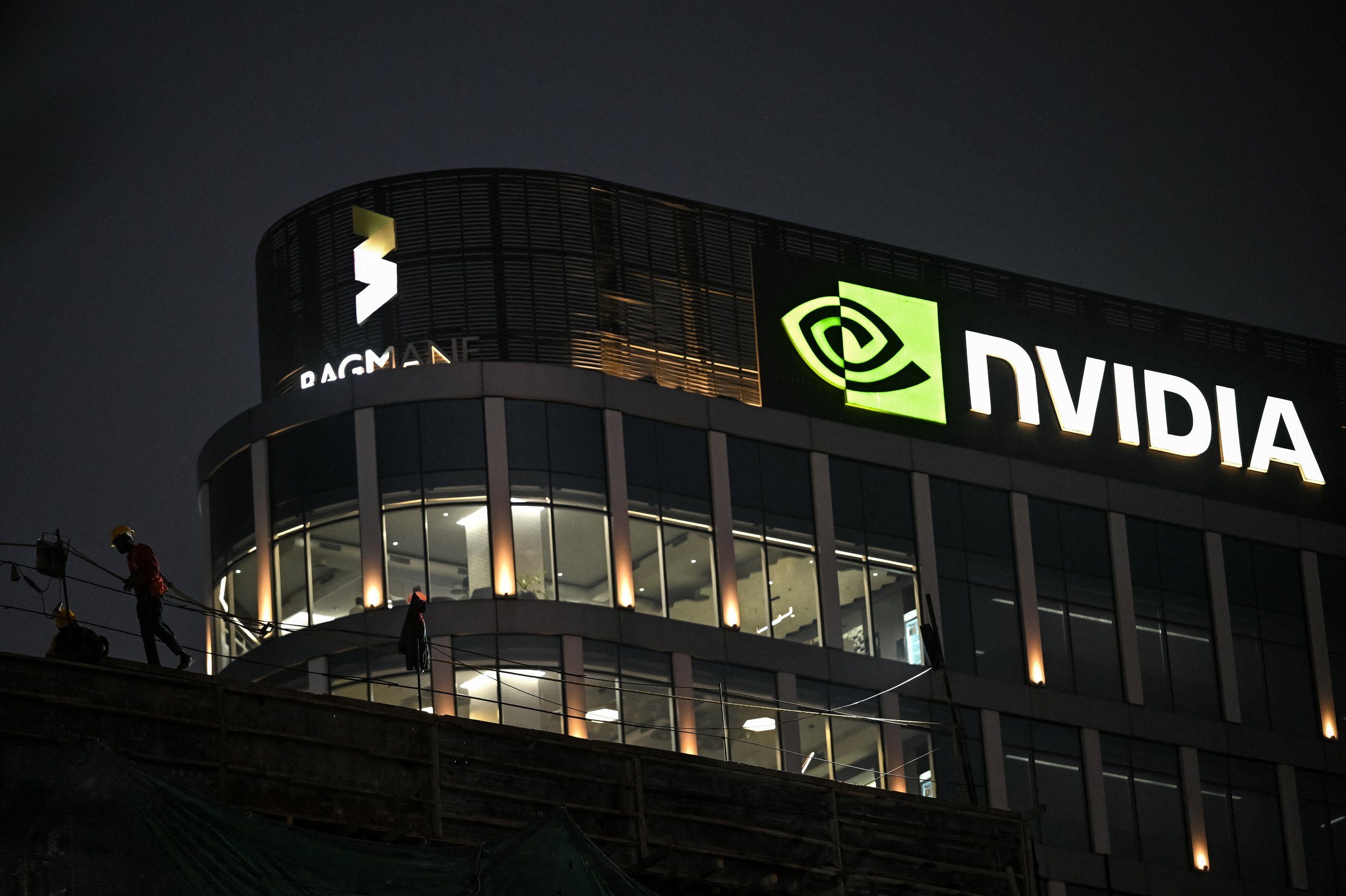
European asset owners are grappling with the “concentration risk” in portfolios towards US technology and AI businesses in the S&P 500 (Idrees Mohammed/AFP via Getty Images)
European defined contribution pension schemes and other asset owners are grappling with the “concentration risk” in portfolios towards US technology and artificial intelligence businesses on the S&P 500, yet some are optimistic on the revenue potential of these companies. Others are increasingly turning to multi-factor equity strategies to gain broader exposure beyond the dominant US tech names.
In the notes for its October 2025 meeting, the Bank of England's Financial Policy Committee warned that some equity valuations "appear stretched", especially "for technology companies focused on artificial intelligence".
"This, when combined with increasing concentration within market indices, leaves equity markets particularly exposed should expectations around the impact of AI become less optimistic," the committee wrote.
At the same time, investors globally have been reconsidering the role equities play in their portfolios. In its Deal Flow Q3 2025 report, MandateWire tracked a net $1.3bn outflow from equities, with European investors withdrawing $0.9bn and US investors taking $1.3bn out of the asset class.
As AI company valuations have soared, some investors spoken to by AOX have expressed concerns over valuations. In June last year, Garry Mackay, principal partner at St James's Place Wealth Management, told us that "global markets are very dependent on the performance of US equities", and added that some investors started the year "uncomfortably reliant on a few dominant tech groups, led by Nvidia".
In October, MandateWire reported Morningstar had altered allocations to its managed and multi-asset portfolios, which have £3bn in assets under management. It added some US small-cap opportunities, which the company's portfolio manager, Nicolo Bragazza, called "an under-appreciated value area of the US market, and given that the overall US market is more expensive". Morningstar also raised allocations to communications stocks including Alphabet and Meta.
Some of these equity decisions have been clouded by the wider political outlook.
In October, Fidelity's Tom Stevenson wrote that "erratic and self-sabotaging" US policies had led some investors to "reluctantly [lift] their gaze to the world beyond".
Over-concentration risk, and why some investors are unfazed
However, many investors appear positive on their US allocations. Adam Brownlee, executive director of Coutts Family Office, explained to MandateWire in September that it continued to view the US market "as a core holding that [it] will remain overweight on", while James Penny, chief investment officer at the UK wealth manager TAM Asset Management, alo said in September that it had an "outweight position to the US, with a slight US growth tilt on it".
At a time where some investors are mulling over their allocations to US equity markets, more than a third of the S&P 500's value is currently made up of the market capitalisation of just seven US tech companies: Microsoft, Apple, Amazon, Tesla, Meta, Nvidia and Alphabet.
“We will see a correction at some point in the market. How big it is, whether it’s a bubble or not, it’s not very clear. But of course we will see corrections”
The Investment Association revealed last year that UK managers had raised holdings to US equities to around 35 per cent in 2023–24, nearly doubling this proportion in a decade, while allocations to UK equities had fallen to 20 per cent.
Mark Jaffray, a partner and senior DC investment consultant at Hymans Robertson, explains to AOX that for members who are more than 10 or 15 years away from retirement, DC schemes often invest between 90 per cent and 100 per cent of their holdings in equities, with a "concentration risk" to the US market and to the "Magnificent Seven" stocks in British savers' portfolios.
Morningstar found in August that Nvidia, Microsoft and Broadcom had contributed to 60 per cent of the S&P 500's gains in the first eight months of last year. Of the scale of the overweight to US tech, Kenneth Lamont, principal for manager research at Morningstar, tells MandateWire Analysis that Nvidia was found in around 90 per cent of investor portfolios, in a recent survey by the advisory company.
While tech businesses are on the "bleeding edge" of AI breakthroughs, he adds that there is a "lot of uncertainty", which leaves markets vulnerable to future fluctuations in value.
"What you do see is a lot of volatility, a lot of cyclicality," Lamont says. "We will see a correction at some point in the market. How big it is, whether it's a bubble or not, it's not very clear. But of course we will see corrections."
For Jaffray, it is not easy to tell if valuations appear unreasonably high. He says there will inevitably be companies "who are going to be losers in some of this", but with the big stocks that make up 25 per cent of the S&P, these don't look "unreasonable in terms of revenue projections". With the growth rates of these businesses over the past five years, he says valuations don't appear "massively stretched".
"I think it's difficult to form a view [that] it's obviously a bubble," Jaffray says. "If you go back to the tech bubble in 1999, there were lots of companies that were on [price-to-earnings] ratios of 100-plus. So the main stocks now, based on reasonable revenue proportions, don't look that [extreme]."
“If you go back to the tech bubble in 1999, there were lots of companies that were on [price-to-earnings] ratios of 100-plus. So the main stocks now, based on reasonable revenue proportions, don't look that [extreme]”
Multi-factor investing to reduce concentration risk
Jaffray adds that some DC schemes are using multi-factor equity approaches to reduce the concentration risk in portfolios, tracking a "bigger spread of companies".
The $2.2tn asset manager Pimco says investors are increasingly looking at multi-factor strategies "due to the potential for more consistent excess returns in relatively cost-effective solutions".
But PIMCO cautions that introducing multi-factor strategies "without thoughtful implementation" can also lead to "concentration in certain sectors or industries".
Jaffray says he has seen large master trusts put between 25 per cent and a third of their equity holdings in multi-factor strategies.
In June, MandateWire reported that the $74bn Border to Coast Pensions Partnership had appointed BlackRock to run a $3.5bn multi-factor equity strategy, targeting five different factors: value, momentum, volatility, quality and size.
By contrast, MandateWire reported that the Dutch $1.5bn Stichting Mediahuis Nederland Pensioenfonds had dropped its multi-factor equity strategy in July, given disappointing long-term performance.
Of the decision to scrap the strategy, the fund said multi-factor investing had been "part of our equity portfolio for over six years, but consistently struggled to keep pace with the broader market across a range of conditions".