
Why are US asset owners investing in sports?
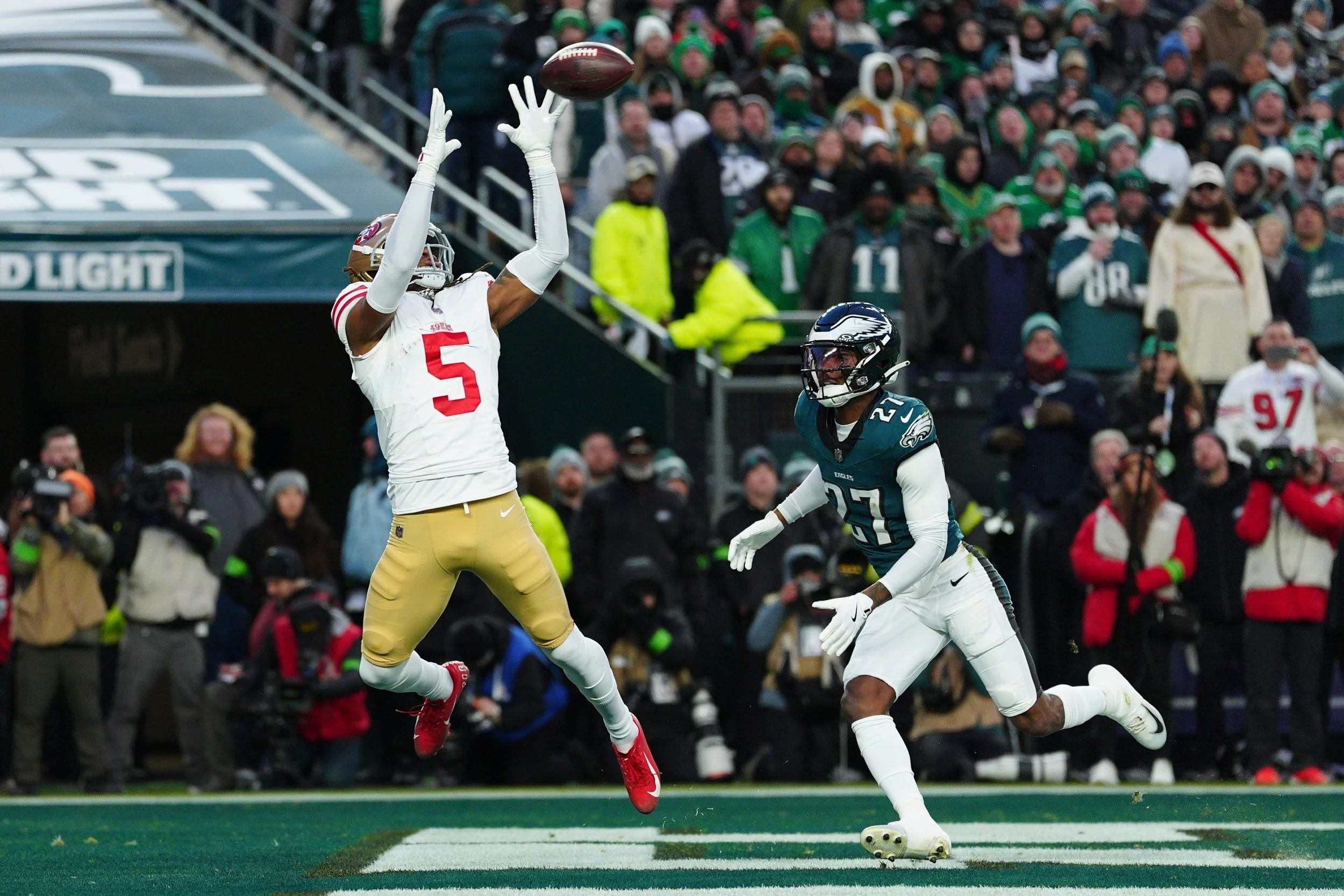
The NFL recently opened-up minority stake ownership in its teams to institional investors, which has prompted some asset owners to dip their toes into the sport. What’s the thinking behind asset owners getting involved in sport? (AP Photo/Derik Hamilton)
Historically – with the exception of the fan-owned Green Bay Packers – American football teams have been owned by very rich individuals. But at the end of 2024, the National Football League opened up minority stake ownership to institutional investors.
The NFL was actually late to the game. Since 2019, the National Basketball Association, Major League Baseball, and National Hockey League have all opened up to allow capital from institutional investors and asset owners have jumped at the chance.
So over the 12 months since then, have any asset owners taken the NFL up on its offer?
Within the past year, public pensions such as the $20.8bn Kentucky County Employees’ Retirement System, sovereign wealth funds like the $57.3bn Texas Permanent School Fund Corporation, endowments such as the $200bn University of California Blue and Gold Endowment and family offices like Certuity have all made or considered investments in sports.
Most leagues have limited equity purchases to 30 per cent of a team’s valuation. The NFL allows up to 10 per cent of team ownership held by private equity investors with each stake worth up to 3 per cent of the total valuation.
Private equity investors in the NFL must invest through a vetted group of managers including Arctos Partners, Ares Management, Sixth Street, and a consortium group which includes Blackstone, Carlyle Group, CVC, Dynasty Equity and Ludis Capital.
KCERS has opted to invest in the NFL, committing $100mn to Arctos’s American Football Fund.
Deputy chief investment officer Anthony Chiu told AOX he was eager to invest in Arctos’ new fund because the NFL is the “dominant moneymaking league” in the US.
While streaming services and traditional cable television battle it out to grow revenue, sports viewership has remained relatively stable over time.
“I think Arctos has done a good job showing that actually it's more of a two-way street,” Chiu said at a pension meeting last year. “The media folks actually need sports just as much because that’s what brings subscribers for the streaming side or just eyeballs period for the linear TV networks.”
Chiu said the Arctos fund was “the purest way” to invest in sports as it is not combined with media or other assets, has some growth exposure and is the only manager invested in all four major sports leagues.
Burgeoning team valuations offer growth prospects but they carry risk because of their “inability to hold true leverage,” according to Chiu.
Investments in less popular sports such as sailing or golf, might also have considerable growth potential. But at KCERS, Chiu said that the appeal of sports investments lie in their holding value. “I wanted to have good long term value,” he said.
KCERS categorizes the Arctos fund within the real assets sleeve of its asset allocation. “It has historically contracted cash flows, they’re not looking to overly expand, they have pricing power and there’s a constrained supply,” Chiu explained.
The New Mexico State Investment Council, a state-level sovereign wealth fund, committed $150mn last year to Ares Management’s Sports Media and Entertainment Fund II, which provides exposure beyond pure equity in franchises including investments in media rights, youth sports, scripted content, and more.
“NMSIC staff felt that a Sports Media and Entertainment industries and adjacencies strategy would provide diversifying exposures relative to more traditional corporate lending,” said Tom Lofton, the council’s director of debt market investments.
Sports investments also offer diversification through ties with other asset classes such as real estate and geographical breadth. “They do have some growth including international exposure, which is not something you would count on, but it increases the value of the franchise,” Chiu said.
Furthermore, sports investments are uncorrelated with the rest of the market. “They are not going to act like stocks and bonds,” Chiu said.
Lofton pointed out that sports investments perform well even during times of economic stress. “The risks are relatively idiosyncratic to the individual deals,” Lofton said. “The sports space has experienced uncorrelated growth as compared to the broader market and, as a result, it is believed the space has long-term durability,” he said.
Sports investments from institutional investors have not been limited to professional leagues.
“I think college sports is the next attractive opportunity within the whole sports landscape,” said University of California Endowment CIO Jagdeep Singh Baccher at a November meeting.
The endowment put on hold its $2.4bn commitment for a 10 per cent minority stake in Big Ten Enterprises, an entity overseeing media rights, sponsorships and other revenue-generating assets, but it still aims to invest in sports as a “cultural capital” investment.
“I would say sports is still one of those things that’s a unifying force for humanity even with artificial intelligence. I think things that are at the intersection of media and entertainment and sports and culture and AI potentially are another category called ‘cultural capital,’” Baccher said.
Recognizing the potential value of such investments, TPSFC, in partnership with Velocity Capital Management, launched an initiative creating a $500mn fund of private equity capital for college athletics.
Short-term revenue and liquidity challenges during the Covid-19 pandemic created an opportunity that has only grown since. “This dynamic created a catalyst in how sports, media and entertainment companies finance their businesses, offering a compelling entry point for private credit solution providers, into a historically resilient asset class with attractive, long-term market fundamentals,” said Lofton.
Whether in the professional or college leagues, sports investments have grown in part simply because they are new and shiny.
“An interest in value, scarcity, and the ability to have investments in it has attracted folks,” Chiu said.
And hopefully it will at least prove a consolation to sports fans if the money they fork out to follow their team through thick and thin goes towards improving their pension fund’s performance.