
What should asset owners do about the 'retailisation' of private assets?
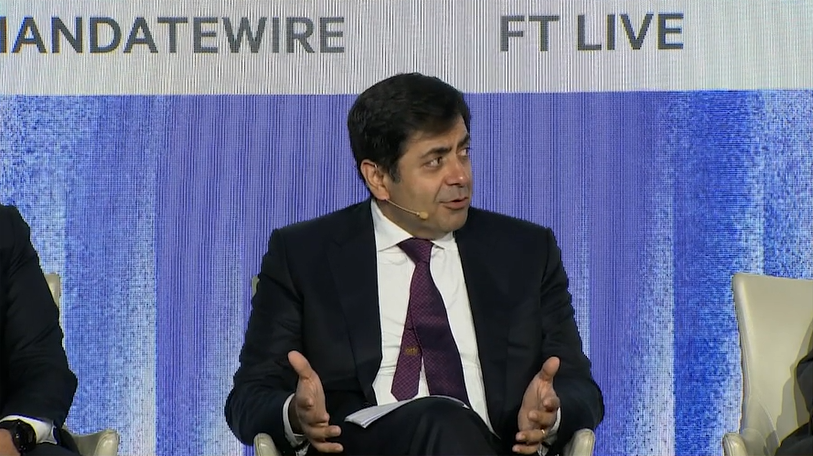
Fraz Siddiqui, chief financial officer of the Abu Dhabi Investment Council, said the trend towards the retailisation of private assets was something asset owners would need to accept and work around
Good morning. Last week the AOX team was in Dubai for the Future of Asset Management Middle East event, organised with our sister title MandateWire.
One topic of conversation that jumped out at me, because it echoes some of the conversations I’ve been having a little closer to home in London, is the question of how asset owners are being affected by asset managers rushing their private equity offerings into the retail market.
According to data from McKinsey, retail money flowing into alternative structures in the US reached $204bn in 2025, more than double the $92bn seen in 2023. And the trend is similar across the globe (many of the UK’s largest wealth managers are building up private assets products).
So what should institutional asset owners, the traditional darlings of private assets managers, do about this?
Many of the answers we found in Dubai were in relation to sovereign wealth funds, but some could equally be applied to any asset owner.
Fraz Siddiqui, the chief financial officer of the Abu Dhabi Investment Council, said the trend was understandable since retail markets offered higher fee income and placed fewer demands on asset managers.
He said: “I think as a community of asset allocators we just need to accept this as something happening, and the question is what are we going to do about it.
“One, I would say very simply, is moving away from just being a client to being a partner. How do we increasingly become a quick, reliable partner where they know very early where we stand on something and we come and deliver on it.”
Siddiqui said asset owners need to encourage private equity managers to think of them as “strategic enablers” of their business - though he acknowledged this would probably lead to asset owners forming fewer, deeper relationships.
Investing in data, leveraging AI machine learning and making much more efficient decision-making would help keep asset owners relevant to private equity managers, he said, as well as seeding new vehicles and partnering with them as they enter new geographies.
Siddiqui said: “It is not just what our capital can do from them, it is what attributes do we bring to a partner that they find helpful in meeting their commercial objectives, where the two are aligned.”
Wael Younan, co-head of sovereign wealth management at TCW, agreed making the relationship a “two-way stream rather than a one-way stream” was important.
“Being more selective on who your strategic partners are going to be and building around them niche access investors.”
