
Congress’s ESG pension plan has a major flaw
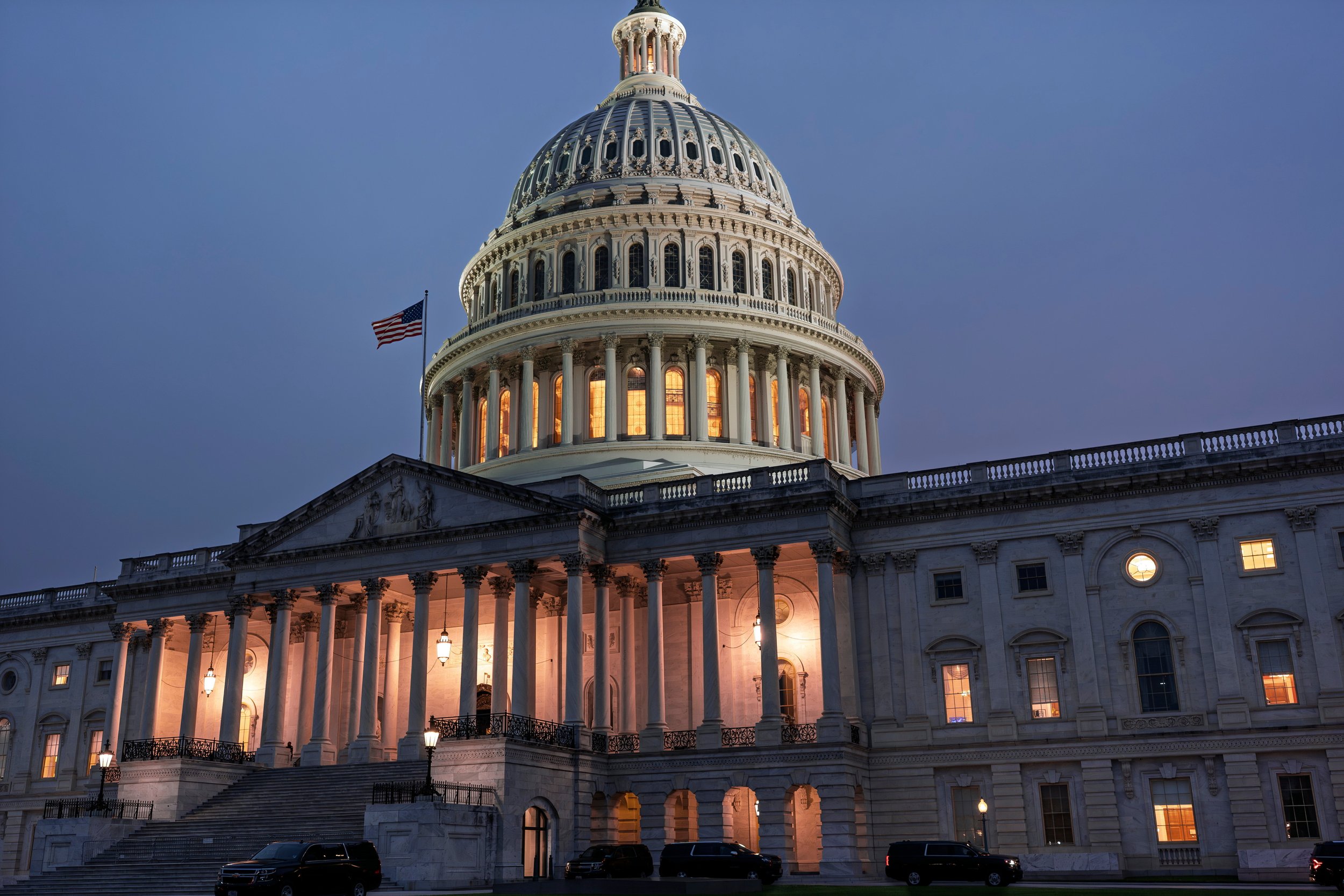
The US Senate is considering an anti-ESG retirement bill which will force funds to only consider financially material questions when they pick their investments. But it may not stop even some of the deepest red states from making investments in green technology (AP Photo/J Scott Applewhite)
The US House of Representatives’ recent passage of an anti-ESG retirement bill — the Protecting Prudent Investment of Retirement Savings Act — has sharpened a divide that has been widening inside public pension systems for years. At stake is not only how the fiduciary duty is defined, but who gets to define it.
In some Republican-led states, lawmakers have increasingly codified a narrow, pecuniary-only interpretation of fiduciary responsibility, potentially limiting how pension funds can consider environmental, social or, governance risks on the basis that a fund’s only job is to provide a decent income in retirement for its beneficiaries - anything else is a distraction.
In Democratic-led states, by contrast, policymakers and pension officials argue those risks can be financially material over the long term because, well, how financially viable is your investment if the factory you’ve invested in has now been reclaimed by the ocean?
The result is a growing red–blue split in public pension governance, even as portfolios themselves often end up looking strikingly similar.
The bill would restrict retirement plan fiduciaries from considering ESG factors unless those considerations can be demonstrated to be strictly pecuniary.
It would also limit ESG-themed investment options and expand potential liability for fiduciaries perceived to be prioritising nonfinancial objectives.
While its future in the Senate remains uncertain, the measure reflects a broader Republican effort to codify a narrow interpretation of the fiduciary duty at the federal level.
Supporters say the legislation restores a clear standard. Brooke Medina of the State Policy Network, a conservative non-profit organization focused on state level policy, called the bill “a step in the right direction for private pension management,” arguing fiduciary duty — whether in public or private systems — should focus squarely on maximising returns for beneficiaries.
“Prudence, risk, and accountability mean focusing on financial fundamentals and protecting beneficiaries — rather than allowing social or political agendas to drive decisions in retirement fund management,” she said.
Critics counter the bill revives a framework many investors found unworkable in practice. Bryan McGannon, managing director at the Sustainable Investment Forum, said the legislation would reinstate the previous administration’s “ill-defined and unworkable” distinction between pecuniary and non-pecuniary factors.
“Our members find the pecuniary versus non-pecuniary standard to be confusing and not well suited to the realities of the investment industry,” McGannon said. He added that sustainability data may be financially material to risk or return but often ends up labeled non-pecuniary under rigid statutory definitions. Fiduciaries, he said, “would not be able to consider all the financially relevant data when making investment decisions”.
These rules may affect the process of how a pension fund invests, but in practice the outcomes can be remarkably similar.
New York, California, Florida and Texas together manage well over $1.5tn in retirement assets but, as any follower of US politics will know, they do so under sharply different statutory and political interpretations of fiduciary duty, often aligned with partisan control at the state level.
In Republican-controlled Florida, state law requires the State Board of Administration, which oversees the Florida Retirement System Trust Fund, to base investment decisions solely on pecuniary factors. Fiduciaries may not sacrifice returns or assume additional risk to promote non-financial objectives.
“The SBA invests solely in the interest of the participants and beneficiaries of the fund,” said Paul Groom, the SBA’s deputy executive director, adding that investment decisions may not promote any non-pecuniary factor. In practice this approach can lead to more scrutiny of proxy voting, not less, since it effectively invites regulators and advocacy groups to closely scrutinise whether or not an investment decision was made solely for pecuniary reasons.
Texas applies similar pressure through Senate Bill 13, which restricts state agencies from working with financial firms deemed to be boycotting fossil fuel companies. Texas pension officials emphasise that they consider only economic value. But that has not prevented the $207bn Teacher Retirement System of Texas from investing in energy, infrastructure and clean tech strategies.
Last year, TRS committed $150mn to Energy Capital Partners VI, a core-plus infrastructure fund focused on domestic energy and storage assets. As in Florida, the constraint lies less in asset allocation than in how investment decisions are justified and governed.
If the planet is gradually shifting away from carbon and towards clean energy then that makes clean energy a good investment for reasons of cold, hard cash.
By contrast, in Democratic-controlled New York, the policy environment supports a broader definition of fiduciary risk. State officials argue long-term threats such as climate change and governance failures can materially affect portfolio value and therefore fall squarely within fiduciary duty.
New York State’s $291.4bn Common Retirement Fund has spent years building out a climate action framework, including a commitment to align the portfolio with net-zero emissions by 2040 and expanded use of proxy voting and engagement.
That latitude has allowed New York’s public pensions — particularly at the city level — to push further. Before leaving office in December, former New York City comptroller Brad Lander announced plans to expand divestment from certain midstream and downstream fossil fuel infrastructure.
“We are in a dialogue about midstream and downstream infrastructure,” Lander said at the time. “I don’t think we need any more pipelines or liquid natural gas terminals given the future we’re facing.”
Lander also urged several city pension systems to remove BlackRock for failing to meet climate-readiness standards. BlackRock argued this was “another instance of the politicisation of public pension funds,” and warned political interference in manager selection risked undermining retirement security for beneficiaries.
California’s Calpers and Calstrs have taken similar long-term approaches, emphasizing systemic risk, arguing that climate change, supply chain resilience and governance failures can directly affect returns over decades.
For example in 2001 and 2000 respectively the two funds started excluding tobacco stocks.
But this decision has not been without consequence or controversy. Analysis which Calpers itself commissioned established that by 2020 the fund had lost out on $3.7bn in missed returns due to its decision - though in percentage terms this impact is only 0.9 per cent.
Whether or not this is a price worth paying is a question that ultimately only the members of Calpers can answer.
Across red and blue states alike, asset allocations remain broadly comparable and changing the fiduciary duty does not mean a fund doesn’t invest in green technology in practice.
The sharper divide lies in governance — how freely funds can engage with companies, select managers and define financial risk.
The House bill moved to the Senate Committee on Health, Education, Labor, and Pensions for review last month. It highlights how politics has become an unavoidable variable in public pension investing.
As Republican-led states seek to narrow fiduciary definitions and Democratic-led states defend broader interpretations, pension systems are increasingly shaped not just by markets, but by the politics of the statehouse.