
How Latin America’s development banks are turning an infrastructure gap into an investment opportunity
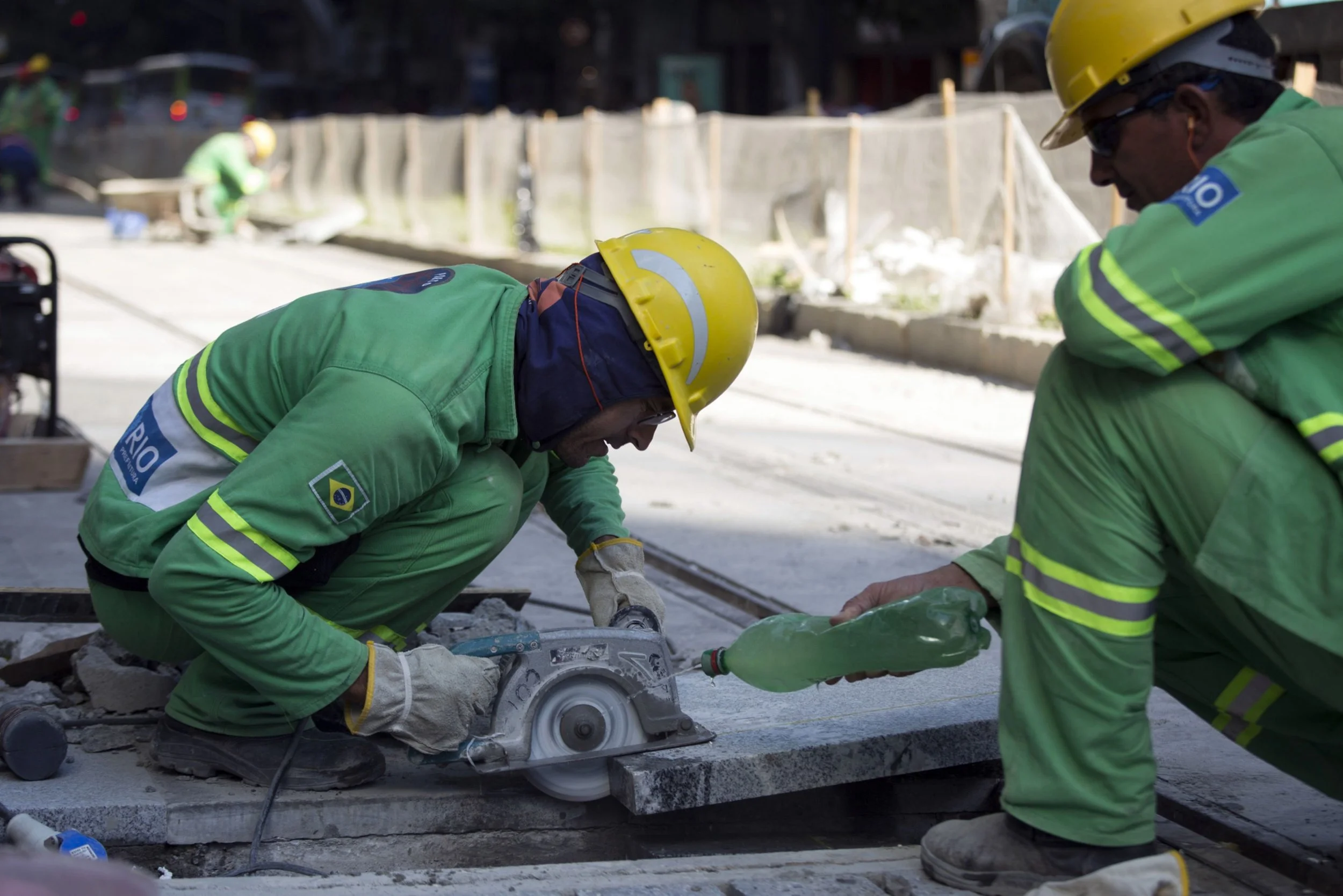
Latin America’s development banks are hoping to entice asset managers to help address the region’s infrastructure needs, with some of the largest tenders ever currently on offer (Nadia Sussman/Bloomberg)
Latin America’s infrastructure gap is usually considered a problem but the region’s development banks are hoping it will increasingly become an investment pipeline.
Across the region the need is obvious: roads, ports, sanitation systems, transmission lines, clean energy projects, digital connectivity and the less glamorous but equally essential work of maintaining existing assets.
The Inter-American Development Bank estimates Latin America and the Caribbean will need to invest about $2.2tn in water and sanitation, energy, transport and telecommunications by 2030 to meet sustainable development goals. That implies annual infrastructure investment of at least 3.1 per cent of regional GDP, with 59 per cent of the total going to new infrastructure and the rest to maintenance and replacement.
If that is the gap, the more interesting question for asset managers who might want to help close it.
Development finance institutions across the region are increasingly trying to answer that question through fund structures designed to mobilise private capital. Rather than relying only on public budgets or traditional project loans, institutions such as the Brazilian Development Bank (BNDES) and the Development Bank of Latin America and the Caribbean (CAF) are building vehicles that can bring in international managers and institutional investors.
BNDES is now preparing a tender to allocate capital to general partners that will manage infrastructure-focus vehicles investing in the country. The initiative is expected to support a fund of more than $1bn focused on developing Brazilian infrastructure through equity investments, according to Luciana Costa, BNDES’s managing director of infrastructure, energy transition and climate.
“The country needs a lot of equity in infrastructure,” Costa said. “That’s why BNDES is analysing the launch of a tender, to allocate money for GPs to manage funds. The purpose is that they allocate equity for infrastructure projects in Brazil."
The new infrastructure tender - which will be by far one of the biggest it has ever done - is expected to open between this quarter of 2026 and the first quarter of 2027.
“We are talking to GPs in Brazil and outside Brazil,” Costa said.
This is the catch: managers need a vehicle that invests only in Brazil to participate in the tender. But Costa said this is not a hard problem to solve. For global firms already looking for emerging market diversification, a Brazil-dedicated strategy could offer a clearer route into one of the region’s largest infrastructure markets.
The timing is not accidental. Brazil has become a major focus for climate and infrastructure capital, helped by the country’s energy mix, natural resources base, concessions market and deep domestic financial system. IDB Invest has estimated there will be $660bn of sustainable infrastructure opportunities in Brazil over the next 20 years, with the potential to create more than two million jobs.
Costa said it is being structured in a way that means the development bank generally acts as an LP and can hold up to 25 per cent of a fund. That means managers are expected to bring outside capital alongside the bank.
“For each dollar that BNDES allocates, the GP has to bring $3,” Costa said, “Our maximum amount that BDES can hold is 25 per cent of the fund.”
BNDES has already used a similar public call model for climate investments. In January 2026, the bank selected seven climate investment funds – such as Brookfield Asset Management and Patria Asset Management – to receive up to $846.5mn in commitments.
Caf is approaching the opportunity from a regional angle. Antonio Silveira, Caf’s vice president of the private sector, described two main routes: direct investments into infrastructure, infrastructure financing and private equity funds, and Caf Asset Management which works with pension funds and industry partners to develop fund markets in specific countries.
The distinction matters because Caf AM is not only investing where markets are already mature. It is deliberately entering counties where the fund ecosystem is thinner, the infrastructure gap is large and private capital needs a structure before it can move.
Caf AM is already more established in Uruguay and Colombia, but is now trying to enter Costa Rica, Paraguay and Peru to use its development mandate to help create the conditions for more private capital to move.
In Colombia Caf AM has partnered with Ashmore in infrastructure debt funds, with Caf acting as an anchor investor to help mobilize local pension capital. Caf AM and Ashmore already launched their second senior infrastructure debt fund in the country with an initial close of $405mn and a pipeline of more than 40 projects across transport, energy, water and basic sanitation by the end of 2024.
But Paraguay may be the clearest example of what Caf AM is trying to do next.
Silveira said Caf AM is in discussions with Paraguayan authorities to create the regulatory conditions for the country’s first debt fund focused on local infrastructure.
“Paraguay is a different zone,” Silveira said. “We are in strong negotiations with the authorities to provide the appropriate regulation, and we have good expectations that this year we can launch the first fund.”
Silveira also said smaller counties in the region often face even sharper infrastructure bottlenecks, while lacking the fiscal room to fund large public investment programs alone.
“There are a lot of infrastructure bottlenecks in the region, and in the smaller counties that’s even stronger,” Silveira said. “Nobody has the fiscal conditions to keep making public investments like crazy, so everybody is looking for ways to mobilize private resources for infrastructure investments”
The manager question is still open, making the effort directly relevant to asset managers looking for openings in less mature Latin American markets.
“We still have to see who the final manager will be and what the form will be,” Silveria added.
Together BNDES and Caf show how Latin America’s development funds are creating different entry points for managers. BNDES offers scale through Brazil-specific infrastructure equity opportunities. Caf AM’s Paraguay effort points to future manager opportunities in less developed fund markets.
The opportunity is not without risks. Latin American infrastructure has historically raised concerns around currency exposure, regulation, political risk and governance. But those risks are also part of why development-backed funds matter. They can offer managers a more structured way into markets where the need is clear but the investment channels are still being built.
For asset managers watching Latin America, the opportunity is no longer just “emerging markets exposure.” It's becoming more specific: Brazil-dedicated infrastructure equity vehicles, Caf AM backed funds in less mature markets and potential manager searches in countries such as Paraguay or Costa Rica.