
Inside Spain’s residential real estate boom, and the appeal for asset owners
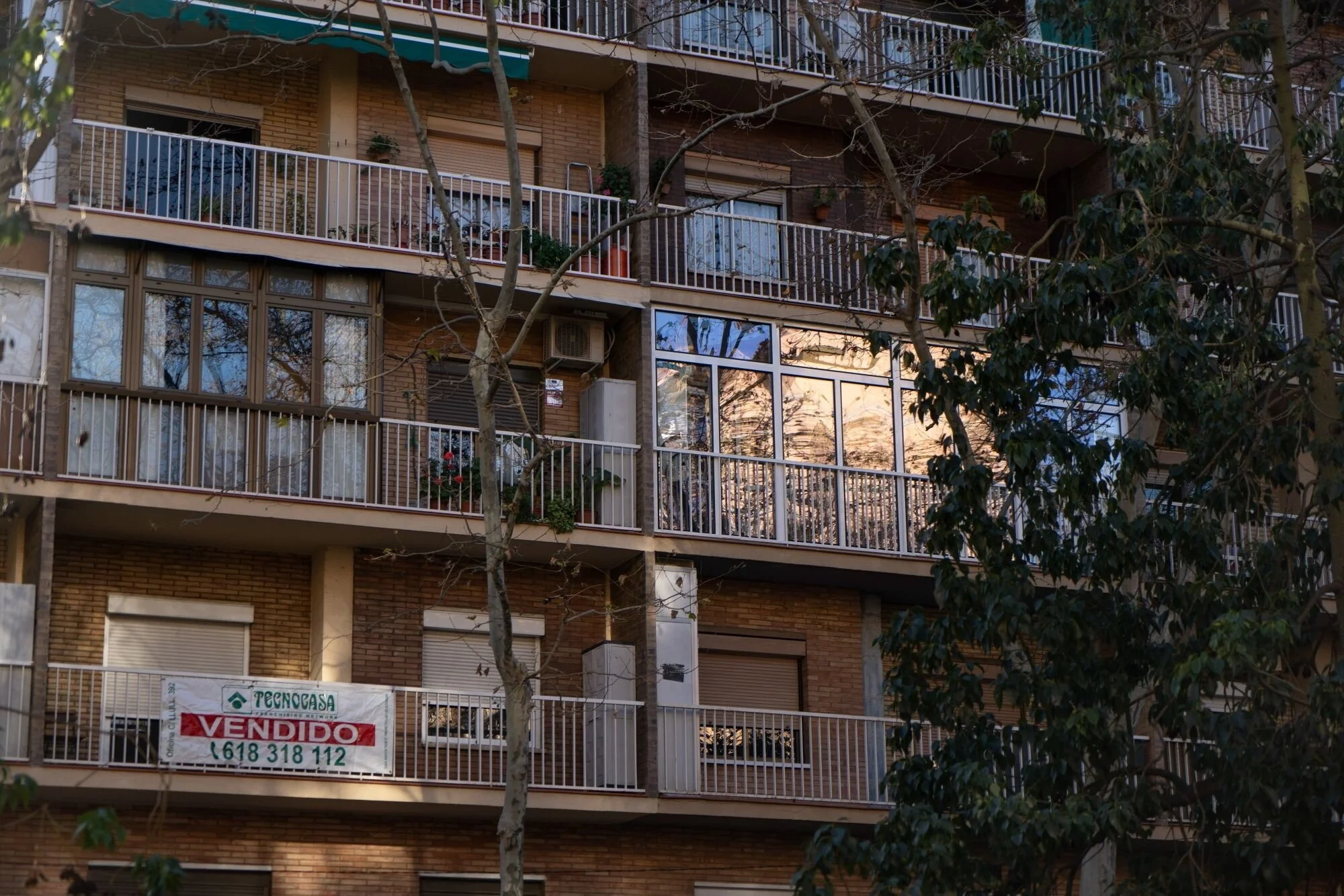
Foreign buyers — both institutional and retail — are growing in prominence in Spain, according to Deloitte, representing nearly 14 per cent of all residential transactions last year, purchasing more than 97,000 homes. This is the highest proportion ever seen from international buyers. (Manaure Quintero/Bloomberg)
Institutional investors including large sovereign wealth funds and family offices are contributing to record foreign inflows into Spanish real estate, particularly in the residential and co-living market. Co-investments with Spanish developers are allowing asset owners to gain local market intel, but many access Spanish real estate through “pan-European real estate funds”, consultants say.
"Spain has become one of the most dynamic real estate investment markets in Europe," Alberto Valls, the partner responsible for real estate at Deloitte Spain, says.
He explains that in 2025 the country saw the highest level of growth in real estate investment across all core European markets, with growth of around a third on 2024 levels.
Indeed, the global real estate consultancy and investor CBRE finds that $21bn was invested into Spanish real estate last year, a 31 per cent increase on the year before, when just shy of $16bn was recorded. This is a marked increase on the average of $13bn recorded during the past half decade.
By contrast, while Germany saw around $35bn injected into real estate in 2025, this represented a 17 per cent drop on 2024 figures, according to Savills. CBRE found that UK real estate investment hit $83bn last year, up from $71bn in 2024, a 16.3 per cent increase.
Foreign buyers — both institutional and retail — are growing in prominence in Spain, he says, representing nearly 14 per cent of all residential transactions last year, purchasing more than 97,000 homes. This is the highest proportion ever seen from international buyers, Valls adds.
"International capital accounts for roughly half of total institutional real estate investment," Valls explains. "It has been gaining importance, with global asset managers, pension funds and insurance companies playing a key role in large-scale transactions and portfolio acquisitions."
AOX sister title MandateWire has tracked several high-profile investors ploughing capital into the Spanish property market.
These include the $2tn Norwegian Government Pension Fund Global, which last March purchased a 40 per cent stake in Axa Investment Management's Spain-focused Lifestyle Housing portfolio, for $273mn. It owns and manages student housing and co-living spaces in Spain and France. A subsidiary controlled by Axa retained the remaining 60 per cent of interest in the business.
Also in 2025, Per Wimmer, chief executive of UK-based family office Wimmer, told MandateWire that Spain and Portugal were its preferred option for real estate. He identified co-living opportunities as particularly promising.
"There are certain parts of Europe that are particularly strong. Spain and Portugal are our favourite markets at the moment in Europe," Wimmer explained.
According to Valls, US investors are the largest international presence in the Spanish market, making up 15 per cent of inflows, while British investors make up 8 per cent.
“Global asset managers, pension funds and insurance companies [play] a key role in large-scale transactions and portfolio acquisitions”
He adds that Canadian investors have also entered the market, with buyers seeking residential portfolio diversification across Europe. The Spanish market is, he says, "supported by strong long-term fundamentals and structural megatrends", and looks "particularly attractive" compared with other markets.
Investors are structuring these transactions through a mix of real estate funds and "pan-European investment platforms, or co-investment through joint ventures with Spanish developers and operating partners", says Valls.
This collaborative approach has allowed international investors to "benefit from the local market knowledge and expertise", he explains.
The appeal of residential real estate in cities
One major driver is the strength of residential property, particularly in urban areas. In 2025, the $1tn US-based asset manager Blackstone was Madrid's largest private residential landlord, holding 13,000 properties in the city. It owns a further c.7,000 across Spain.
At the moment, Valls says investment activity "is highly concentrated in Madrid and Barcelona, which together account for more than half of total real estate investment in Spain".
But he adds investors are also turning to "secondary cities" including Seville, Valencia and Bilbao, "particularly in living segments such as student housing and [build-to-rent projects]".
CBRE found in its fourth-quarter 2025 report on Spanish real estate demand that Spain's living sector is "one of the most dynamic and strategic segments of Spanish real estate", given both "structural and short-term factors that continue to strengthen its attractiveness".
Currently, multi-family housing appears strong, which CBRE calls "one of the major drivers of the sector, with €2.2bn ($2.5bn) invested". Of this, $1.9bn was put into build-to-rent investments in 2025.
But CBRE says a mismatch between supply and demand could "shift a significant portion of households into the rental market".
Valls echoes this, saying there is a "persistent imbalance" in the supply of housing and market demand, which has supported price growth and the appeal for international investors.
However, sentiment has been dampened by local protests around housing affordability, particularly in metropolitan areas including Barcelona and Madrid. In April 2025, the local Madrid tenants' union found that more than 150,000 people joined marches protesting against increasing rents and the rise of short-term rental properties for tourists. Singular Bank estimated that house prices in Spain would climb by nearly 10 per cent between 2025 and 2026.
But Valls says foreign buyers also continue to be drawn in by Spain's "quality of life, favourable climate and lifestyle".
Demand across different sectors
Institutional investors see the appeal of Spain's "strong tourism industry", but wider growth, "above the average of major European economies", is also contributing to the "sustained interest" in real estate, according to Valls.
But there is also a symbiosis at play, with institutional investment contributing to growth as well as reaping its benefits.
According to the OECD's Capital Market Review for Spain in 2024, institutional investors have been an "important driver of capital market dynamism" in the country, with more than four-fifths of Spanish businesses (86 per cent) citing the desire to encourage institutional investment as a reason to remain a listed business.
Of the appeal of property, Valls says the residential sector "is currently attracting the highest level of investor interest, driven by strong structural demand".
Yet demand is also being driven by "alternative assets such as flex-living", and data centres, which are "expected to attract increasing attention".
This interest is "linked to artificial intelligence and the entry of new players focused on hyperscale strategies", Valls says.
Commercial real estate is also "regaining relevance, particularly prime offices and prime retail assets, supported by their strong operational performance", Valls adds.
But investors must take note of the gulf opening up between "prime and secondary assets", with institutional investors "showing a clear preference for high-quality properties in prime locations".