
Infrastructure proves attractive for European investors as inflows hit $8.8bn in Q3
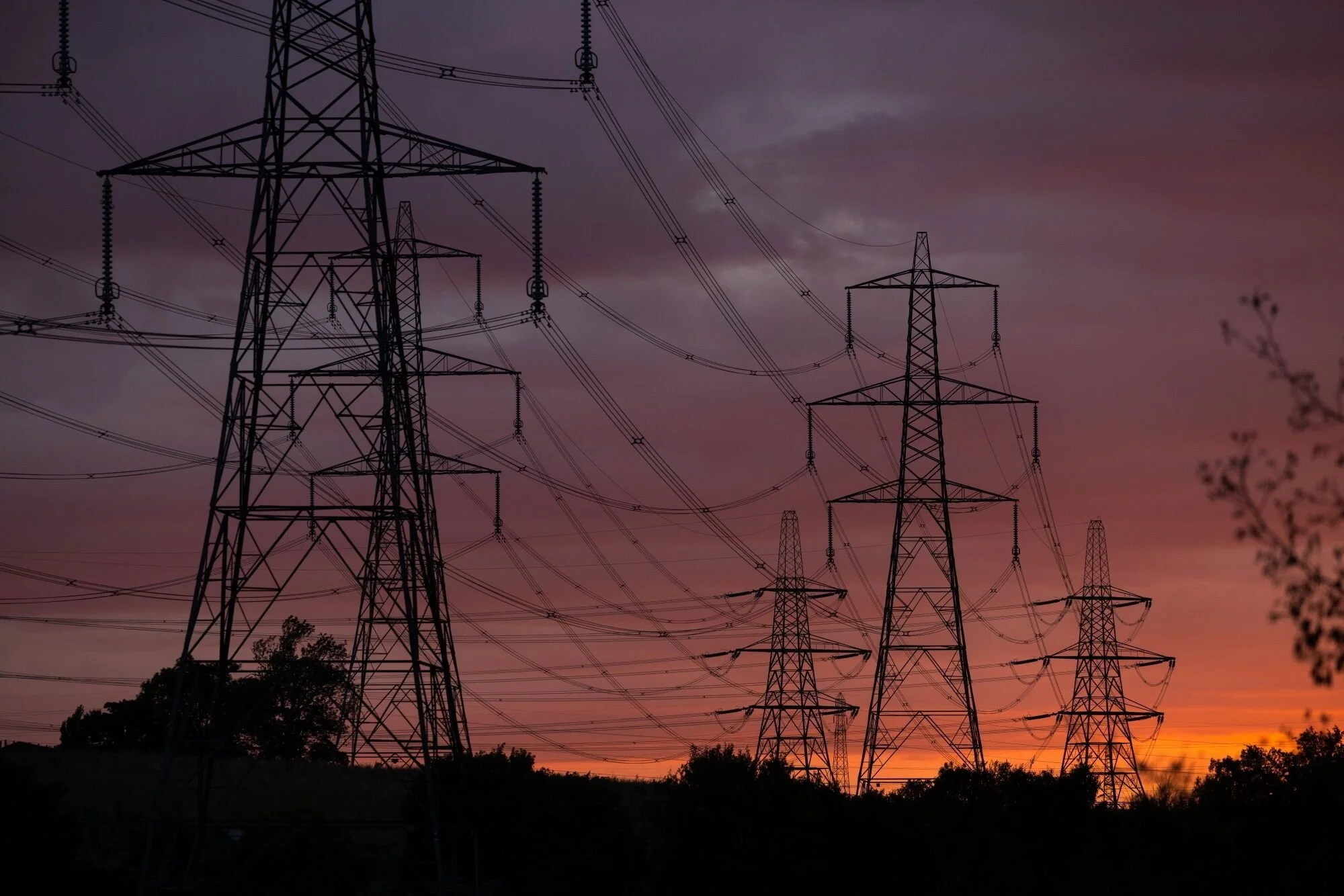
The growing need for green infrastructure in the UK and across Europe is driving large-scale investors like Norway’s Government Pension Fund Global and the Australian-owned IFM Investors into projects - with family offices also joining the party (Chris Ratcliffe/Bloomberg)
The growing need for green infrastructure in the UK and across Europe is driving large-scale investors like Norway’s NKr19.6tn ($1.9tn) Government Pension Fund Global and the Australian-owned A$264bn ($175bn) IFM Investors into projects. A mix of pension investors, sovereign wealth funds and family offices are eager to tap into the diversification potential of the asset class and its ability to provide stable income flows.
According to Sarah Hopkins, head of equity solutions at WTW, institutional clients are turning to infrastructure "relative to other private markets opportunities", with the consultancy witnessing growing demand for climate infrastructure assets as investors seek to take advantage of financing opportunities for projects in Europe.
"There remains a large financing gap for infrastructure assets in Europe and we continue to see high demand for climate infrastructure," Hopkins tells MandateWire Analysis.
Indeed, infrastructure net inflows* shot up in Europe in the third quarter, to $8.8bn from $1bn in the second quarter. Q3 inflows were also markedly higher than the $3.8bn inflows recorded in the first quarter, and $1.5bn seen in Q4 last year.
Mandate awards in the third quarter also reached their highest levels in a year, with 8 new mandates and 22 asset reweightings compared with 8 new mandates and five reweightings to infrastructure in the second quarter, eight mandates and 13 reweightings in Q1, and nine new mandates and 18 new reightings in Q4 last year.
Large-scale climate commitments
The third quarter's higher infrastructure inflows came off the back of two blockbuster climate-related infrastructure allocations by Norges Bank Investment Management, the manager behind Norway's Government Pension Fund Global. NBIM made a €4.5bn ($5.3bn) direct investment in German energy grid operator TenneT.
Harald von Heyden, NBIM's head of global renewable infrastructure, said the deal demonstrated the commitment of the sovereign wealth investor "to finance the energy transition".
NBIM also ploughed $1.5bn into a green energy transition fund run by Brookfield Asset Management, with von Heyden telling MandateWire Analysis exclusively in October that a further $3bn allocation to green global managers would help it invest across energy transition opportunities, storage and hybrid energy projects.
Part of the desire for green energy investments stems from more data centres coming online in Europe, with von Heyden explaining that the growth of hybrid energy projects would help support investors in an era of growing energy demand.
Hopkins agrees that data centres are an "increasingly significant opportunity for private markets managers, driven in large part by the rapid expansion of AI". Such infrastructure projects can offer high risk-adjusted returns, "even in non-prime locations", she explains.
"Whether accessed through real estate or infrastructure strategies, these assets have become popular to finance given their strong structural tailwinds," Hopkins affirms.
Addressing the UK's infrastructure needs
Alongside NBIM's new search for global asset managers to meet its voracious demand for green infrastructure, UK pension schemes have made large expressions of interest towards infrastructure projects this year.
In January, MandateWire reported that the $41.5bn People's Pension was now ready to make large-scale allocations to real assets, including infrastructure and property, with a substantial amount of the $5.3bn investment expected to be earmarked for UK assets if these meet the pension investor's needs.
In February, the $65bn National Employment Savings Trust also announced its plans to invest $6.6bn into IFM Investors by 2030, following its acquisition of 10 per cent of IFM's holding company, Industry Super Holdings.
Elizabeth Fernando, chief investment officer at Nest, said IFM had built up an "incredible track record" in the UK infrastructure space.
IFM's commitment to UK deals was underscored by its participation in the UK Super Summit in the middle of October. Attended by a number of Australian superannuation fund leaders, the summit was aimed at helping the funds explore UK investment opportunities and how to break down barriers to investment.
IFM has had a long presence in the UK infrastructure market, having owned a 35.5 per cent stake in the Manchester Airport Group since 2013, which owns London Stansted Airport, Manchester Airport and the East Midlands Airport.
In 2017, IFM acquired a controlling stake in the 43-kilometre M6 toll road near Birmingham, before selling a 25 per cent stake in the project in 2023 to the $5.5bn GLIL Infrastructure fund, an investor backed by a consortium of local government pension funds. It was founded in 2015 by Greater Manchester Pension Fund and the London Pensions Fund Authority.
“The supply of UK private markets assets that these [Australian] institutions can invest in has grown, in-line with the needs of the energy transition and broader infrastructure needs”
Gregg McClymont, IFM's executive director for public affairs in Europe, tells MandateWire Analysis that the UK has a "pretty healthy market" for core infrastructure, with big potential projects like the Lower Thames Crossing, which the government committed an additional $790mn of funding to in June. The project aims to eventually connect Kent and Essex through a new Thames tunnel near Tilbury, though it is anticipated to cost around $13bn.
These are the types of projects and funding needs that the Super Summit has been designed to address, McClymont explains.
"The government's put quite a lot of effort and money into trying to create a model to crowd-in private investment to build the Lower Thames Crossing, [and] that could be something that the UK government potentially wishes to discuss," says McClymont.
He adds there is a "symbiosis" between the Australian superannuation funds' need for greater investment returns to support savers into retirement, its hunt for overseas assets and its ability to back infrastructure projects in the UK.
McClymont adds: "The supply of UK private markets assets that these [Australian] institutions can invest in has grown, in-line with the needs of the energy transition and broader infrastructure needs, and even in growth equity — life sciences for example."
Family offices joining the infrastructure party
Another driver of infrastructure demand is the desire for assets that generate stable income returns for institutional investors. WTW's Hopkins says private markets assets, including infrastructure, are "poised to benefit" from investors' need for "diversification in the face of uncertainty and long-term return generation".
Alongside pension investors and IFM, family offices are also eager to tap into the diversification potential and stable income-generation provided by infrastructure.
According to a study published by Ocorian — a global provider of services to wealthy individuals and family offices — in August, nearly two-thirds of families (64 per cent) plan on upping infrastructure allocations by between 25 and 50 per cent during the next two years.
This compares with a fifth (22 per cent) of family offices planning greater real estate investment allocations, 21 per cent planning to bump up allocations to private equity and 32 per cent for private debt.
Indeed, MandateWire has also reported strong interest from European family offices in infrastructure investments.
In October, we reported that the UK-based $669mn Souter Investments backed a private equity deal by Duke Street, to acquire the modular social infrastructure builder McAvoy. And, in August, MandateWire revealed that the Spanish family office Pontegadea Inversiones had acquired a 49 per cent stake in a UK port and logistics business from Brookfield Asset Management.
Alongside its study, Ocorian said the diversification provided by alternatives like infrastructure were a "key reason" for increasing allocations, alongside the ability for these to "provide an income" to family investors.