
Banco Master’s collapse proves problematic for Brazilian pensions
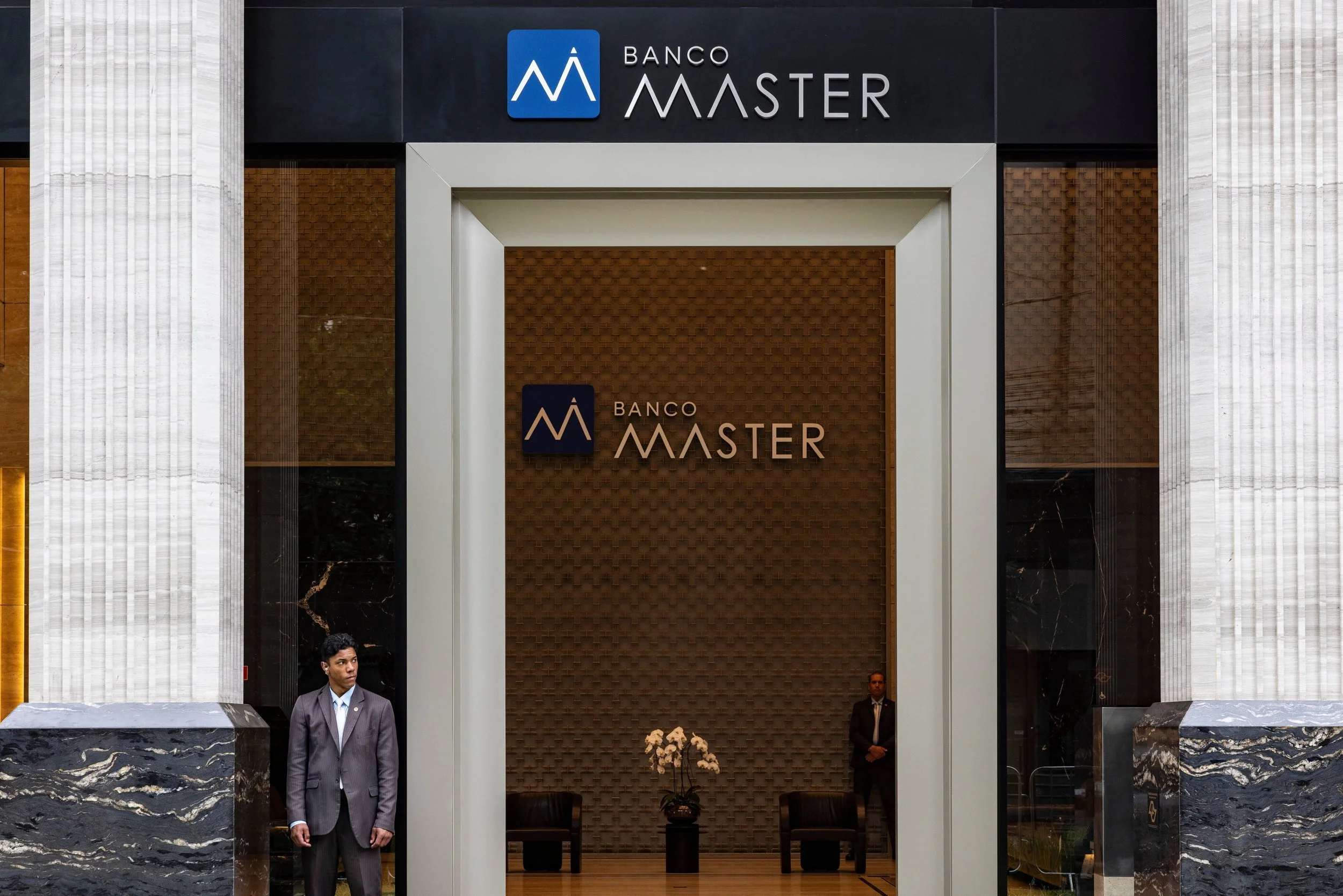
The Brazilian Central Bank shut down Banco Master in 2025 after months of liquidity stress, rule breaches and a federal fraud investigation. This has kicked off a chain reaction which is causing problems for some of Brazil’s pension funds (Victor Moriyama/Bloomberg)
Banco Master was never one of Brazil’s banking giants. It held less than 1 per cent of the country’s banking assets. But its collapse has become one of the loudest financial failures in recent Brazilian history.
The Brazilian Central Bank shut it down in November 2025 after months of liquidity stress, rule breaches and a federal fraud investigation. Its majority shareholder has been arrested. The failure triggered an estimated $7.8bn payout from Brazil’s private credit guarantee fund, the FGC, to roughly 800,000 investors. A massive bill for a bank that had grown aggressively by selling high-yield products marketed as protected by the guarantee fund.
But the most uncomfortable fallout has landed in a corner of the market that is supposed to be boring: public pension funds.
Between 2023 and 2024 19 state and municipal pension plans bought $364.8mn in Banco Master financial bills, according to Reuters. These were not the typical FGC-covered retail products, they were longer-term institutional securities and their recovery now depends on the bank’s liquidation process, which could take years and may not return full value.
The biggest known exposure was Rioprevidência, the pension fund for Rio de Janeiro state workers, with about $186.2mn in Banco Master financial bills. Federal police have targeted the fund as part of an investigation tied to the bank’s collapse. Rioprevidência said a court ruling protected the amount by allowing proceeds from payroll-deducted loans that would have gone to Banco Master to be retained for the pension system, with expected settlement in about two years.
Others moved defensively. Amapá Previdência, or Amprev, said Banco Master exposure represented 4.7 per cent of its portfolio (or $77mn) and created a specific commission to follow the liquidation. It later said it had taken measures such as blocking payments to the bank and expected to recover the money over three to four years.
Maceió Previdência said its Banco Master investments represented less than 10 per cent of its $268.7mn portfolio and it had met with unions to reassure beneficiaries and said it was in contact with regulators about recovering funds.
São Roque Prev, a municipal pension plan in São Paulo state, had bought $17.9mn in Master financial bills, more than 18 per cent of its portfolio, according to the state’s public accounts prosecutor. After liquidation, São Roque valued the Master securities at zero while keeping its legal credit claim alive.
The regulatory impact has been swift. Brazil’s National Monetary Council has tightened investment rules for public pension plans, linking access to riskier or more complex assets to governance certification. The changes require stronger risk controls, clearer duties for investment committees and boards, qualified technical officers and stricter accreditation of managers and distributors. Under the new framework only 176 of Brazil’s 2,133 public pension funds will be allowed to invest outside federal government debt.
The irony is that Brazil’s private closed pension funds appear to have largely avoided the hit. Previc, which supervises these funds, said they had no Banco Master investments at the time of liquidation, saying risk-based supervision and investment-governance controls was the reason for this.
That may be the real lesson. Banco Master did not just test credit risk. It tested whether institutional investors could distinguish a legal investment from a prudent one.