
New York City’s tussle with BlackRock over ESG turns ugly
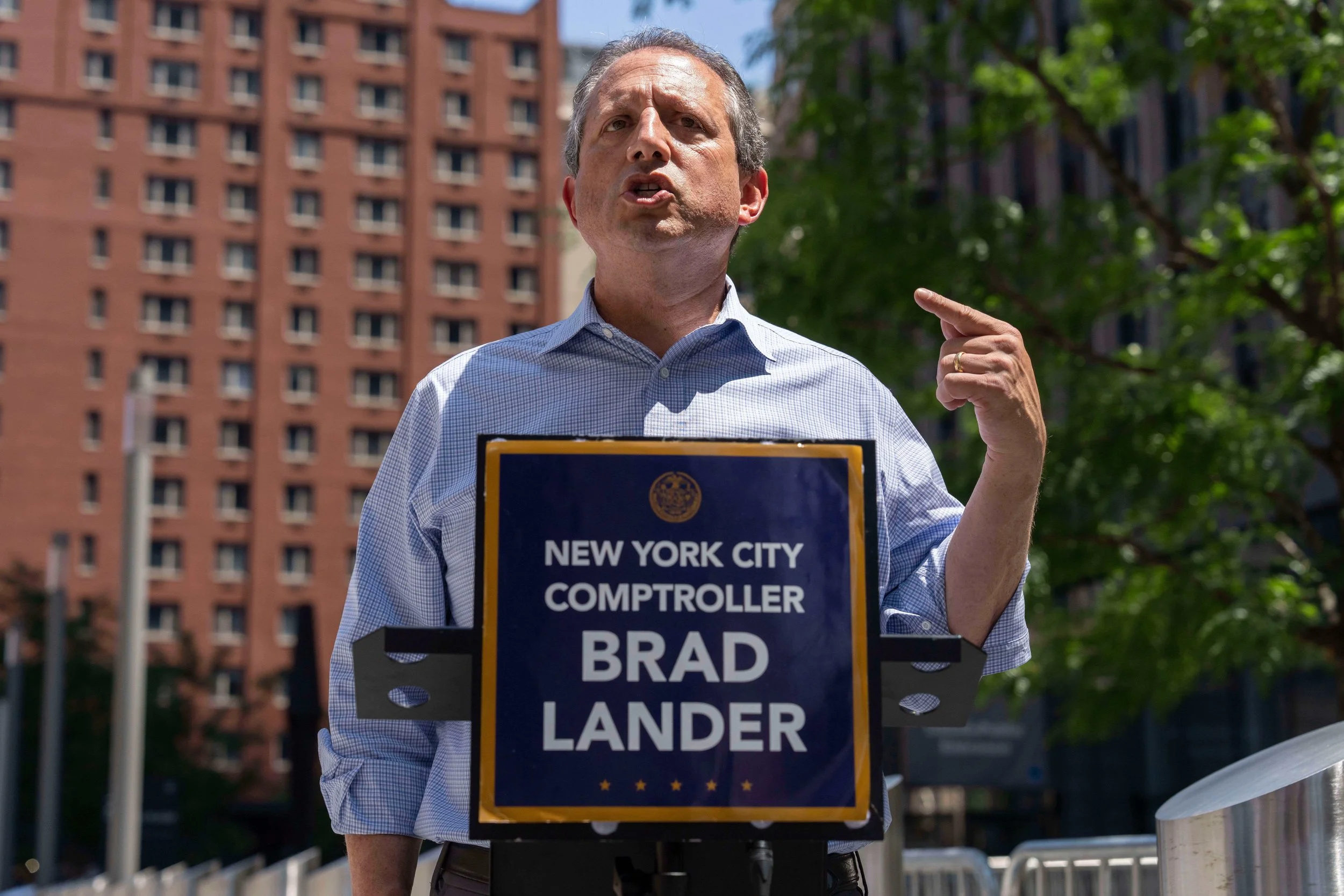
Outgoing New York City comptroller Brad Lander has told the city’s pension systems to fire BlackRock over its climate track record. This has not gone down well with the world’s largest asset manager (AP Photo/Yuki Iwamura)
Just a few weeks ago, the New York City comptroller’s office announced the city’s pension systems should sever ties with its biggest asset manager, BlackRock. More specifically, BlackRock’s $42.3bn US public equity index mandates.
In April New York City comptroller Brad Lander instructed public markets asset managers for three of the city’s five public pension funds (the $10.6bn Board of Education Retirement System, the $96.3bn New York City Employees’ Retirement System and the $119.7bn Teachers’ Retirement System of the City of New York) to submit written plans detailing an actionable methodology to achieve Net Zero by 2040 in their respective portfolios.
Lander’s position is very much that “climate risk is financial risk” so the announcement was hardly a shock.
Only three managers failed to meet the required standards: Fidelity Investments, PanAngora Asset Management and, of course, BlackRock.
Fidelity’s World ex-US small cap mandate (which represents $384mn in assets for the TRS) and PanAngora’s US Equity Small Cap Core mandate (which represents $358mn in assets for the NYCERS and the TRS systems combined) are both up for termination, while Lander recommends the NYCERS, TRS and BERS approve a notice of search for appropriate managers to take over BlackRock’s massive swath.
The reason? A lack of “active stewardship.”
This all stems from Donald Trump’s re-election and his appointment of Mark Uyeda as chairman of the Securities and Exchange Commission.
Uyeda has ended the SEC will no longer defend the Enhancement and Standardization of Climate-Related Disclosures for Investors rule which, among other things, requires registrants to disclose their processes for identifying, assessing, and managing climate-related risks in their portfolio companies.
Many asset managers have responded to these cues including BlackRock, whose CEO Larry Fink wrote in 2020 that “climate risk is investment risk”.
Which brings us back to Brad Lander, who wrote: “Following Trump administration changes in reporting requirements to the SEC, BlackRock recently announced it has ceased proactive engagement on proxy voting issues with US companies where it owns 5 per cent or more.
“As a result, its engagement does not sufficiently encourage portfolio companies to take concrete decarbonization actions, such as setting net-zero goals, adopting science-based targets, or aligning lobbying and capital expenditures with climate goals.”
BlackRock has criticised Lander’s recommendation as “another instance of the politicisation of public pension funds,” and it looks forward to “demonstrating the breadth and depth” of its capabilities to the NYC Bureau of Asset Management.
But Lander’s tenure as comptroller is coming to an end (he is running for Congress next year) and on January 1 he will be replaced by Manhattan borough president Mark Levine. So Lander’s guidance may not last very long.
Indeed BlackRock suggested as much in its response to Lander: “We look forward to continuing to serve NYC BAM and the city’s pensions as you pursue your next career opportunity.”