
European asset owners look to Korea and Taiwan amid wider EM diversification push
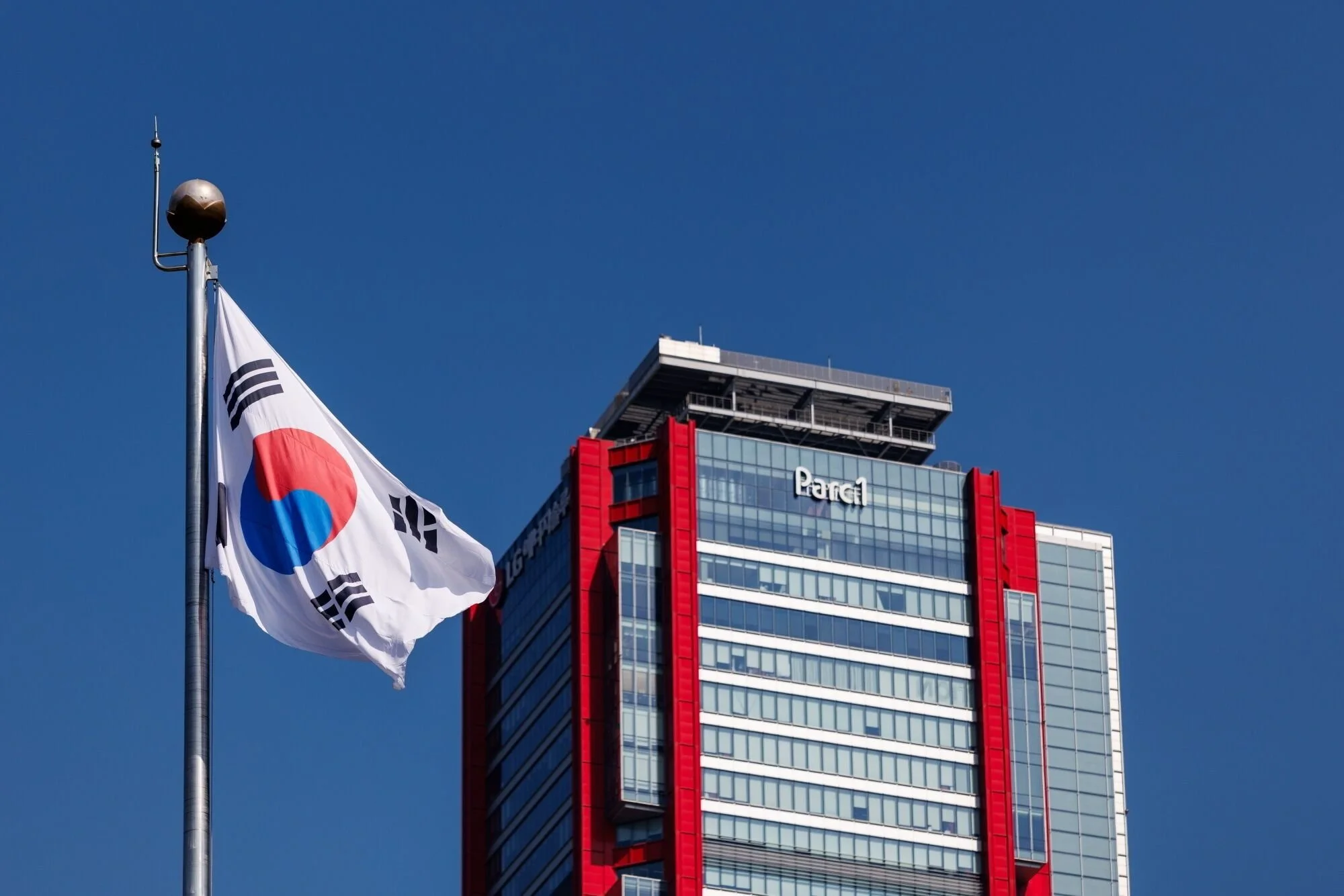
China, Taiwan and South Korea have driven the MSCI Emerging Markets index to deliver double-digit returns and outpace the MSCI World index which has prompted European asset owners to look at these opportunities (SeongJoon Cho/Bloomberg)
With a weaker dollar and ongoing policy uncertainty, emerging market equities have seen their highest returns in 15 years, with countries like South Korea and Taiwan emerging as bright spots, given surging technology stocks and government reforms, explains Claire Shen, WTW’s head of emerging markets equity investments.
Asset owners are also taking a pragmatic approach to China despite some ongoing headwinds.
Shen, who is based in Hong Kong and advises global investors on their EM positions, says some larger clients often have "quite a number of people just dedicated to an EM portfolio alone".
Sophisticated clients, including some sovereign wealth funds, are in a good position to hunt for "individual regional specialists", she says. This could include separate Chinese or Indian managers, but Shen adds that "very sophisticated large clients" could consider a separate allocation to either South Korea or Taiwan.
According to Schroders' third quarter markets review, China, Taiwan and Korea have driven the MSCI Emerging Markets index to deliver "double-digit returns" and outpace the MSCI World index. The latter two countries have been "standout performers" given the bounce from artificial intelligence and technology demand, Schroders says.
“Investors could see disproportionate growth from sectors that are more exposed to the AI supply chain, to high-end manufacturing, to electric vehicles [and] robotics”
Shen explains that investors could see "disproportionate growth from sectors that are more exposed to the AI supply chain, to high-end manufacturing, to electric vehicles [and] robotics", with Taiwan and Korea relied upon for their chipmaking and semiconductor capabilities.
But single allocations to either country remain rare, while broader standalone emerging market allocations should be "highly dependent on clients' individual governance structures", Shen says. "There are a limited number of offerings in [South] Korea and Taiwan as a single country allocation alone."
Korea stocks surge to record highs
From the beginning of the year until October 27, Korea's Kospi stock index posted a 68.5 per cent return, surpassing the 4,000 mark that month for the first time ever. The Taiwan Stock Exchange Capitalization Weighted Stock Index returned 22.6 per cent during the same time period.
Shen explains that Korea is going through governance structure changes "similar to Japan... about five to 10 years ago", providing a "really good tailwind" for the market.
According to the Asian Corporate Governance Association, governance reforms include the introduction, from September next year, of cumulative voting for companies with more than Won2tn (around $1.35bn) in assets, which the association says has been designed to strengthen shareholder democracy.
Companies will also face a new requirement for at least two independent board members to be elected as audited committee members. Until now, companies could elect only one independent director as an audit committee member.
In October, Goldman Sachs wrote in an emerging markets briefing that reforms to company governance could "drive up the country's equity prices", adding that 70 per cent of stocks trade at below their book value.
"Stocks from South Korea to South Africa are expected to gain amid strong company earnings, a weaker US dollar, and demand for geographical diversification," Goldman added.
Yet South Korea's stock market remains highly tilted towards technology stocks and is dominated by "Samsung and a few others", says Shen, noting that technology companies make up around two-fifths of the index's value.
The EM revival
The wider hunt for more diversified returns given ongoing policy uncertainty has contributed to a nine-month rally for emerging markets, which have seen the MSCI Emerging Market Index (USD) return 30.8 per cent since the beginning of the year (up to October 27), compared with a 17.2 per cent return on the S&P 500 Price Index (USD).
Shen explains that equities in emerging markets have picked up following a dour 15 years of underperformance compared with developed market stocks. But now, strong company growth prospects and reasonable valuations are propping up the market.
This assessment was echoed by Fidelity's investment director Tom Stevenson, who wrote at the beginning of October that emerging markets have "gone nowhere for nearly two decades", following a "spectacular rally" for Chinese equities in the mid-2000s, which experienced a seven-fold rise.
But EM shares now are among the "cheapest in the world", he wrote, while a sense that US exceptionalism is faltering has led large investors to look elsewhere. "A continued rotation out of the US is likely to benefit developing markets more," Stevenson added.
Across Europe, AOX has recently reported on a host of institutional investors positive on emerging market equities.
In October, Tim Carr, Schroder Investment Solutions investment director, told AOX that the $1,051bn asset manager was optimistic on emerging markets in general "because valuations there are reasonable and inflation is structurally lower than [in] developed markets".
That month, AOX sister title Mandatewire also reported that the SFr482.5mn ($603mn) Pensionskasse der Zuger Kantonalbank had allocated 2.4 per cent to emerging market equities in the first quarter of 2025, while developed market equity allocations saw a 4 percentage point reduction. And, at the end of September, we revealed that the circa €5.9bn ($6.9bn) French guarantee fund Fonds de Garantie des Victimes was planning a tender for EM bonds.
Investors becoming pragmatic on China
Shen notes that Chinese investments have become "normalised" now, with investors taking a "pragmatic view" towards the market. Positive "incremental" changes include the performance of technology companies, which has fed through into wider stock market growth.
"Business decision-makers and investors are taking a more normalised view towards China, even though they know a lot of the bad things about property, about regulation or about policy, about trade tensions. All that feels like 'known' information."
More nimble institutional investors like family offices have made the decision "faster" on markets like China, but asset owners with lengthy and more stringent asset allocation procedures are more likely to be more measured in reviewing allocations towards the market, she finds.
"This year, China has been performing really well, but for most of our institutional asset owners, they haven't really gone back to the stage where they use [a] China standalone allocation. But for the... ones who actually do, they tend to be family offices."
Scale and team resourcing should influence how institutional clients approach their emerging market allocations, and their ability to bring on individual market specialists, she adds.
"For a lot of clients, when [emerging markets] is a small portion of the portfolio, it's less likely for them to just build a very diversified portfolio for that small portion of allocation. [This is] because of the team resourcing. They don't really have that many people to look into it," Shen says.