
Could a total portfolio approach spell opportunity for active asset managers?
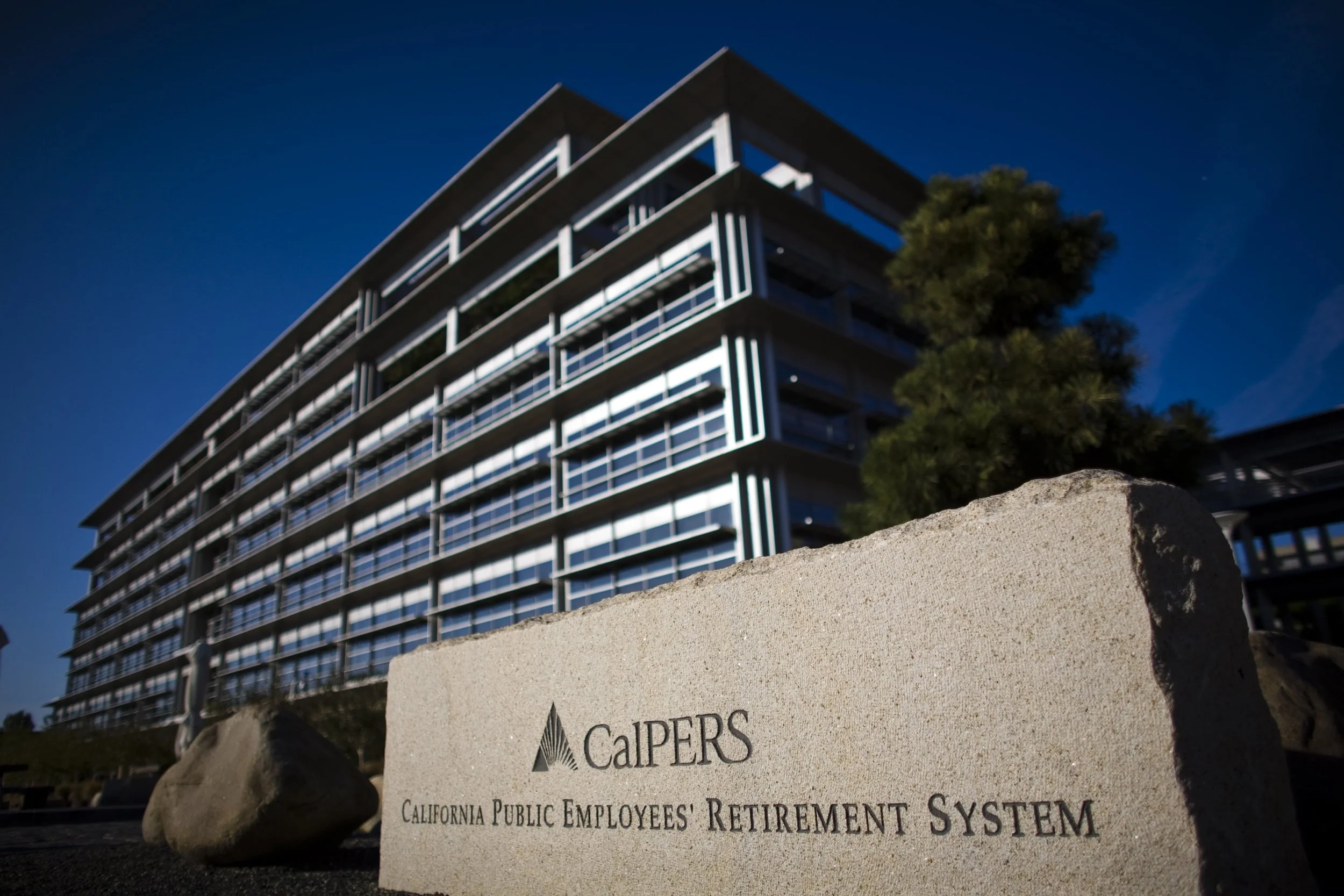
Interest in asset allocation frameworks such as the total portfolio approach is gathering pace, with proponents including Calpers and the Canada Pension Plan Investment Board. While this enthusiasm could open the door to a larger role for active management, such strategies require governance structures and investment expertise currently only available to the largest investors (Reuters/Max Whittaker)
Traditional mandates have typically relied on a strategic asset allocation model, where investors dedicate set proportions of their portfolios to different asset classes.
Internal investment committees then periodically meet to review performance in relation to wider market returns, often with the help of consultants.
This set it and forget it approach suited asset owners following the bull run of global stock markets seen after the 2008 financial crash, says Amin Rajan, chief executive of Create-Research.
However, higher inflation since 2022 has brought about a more volatile era for investors, creating the need for a different approach to better respond to difficult market conditions.
“Asset owners are becoming much more aware of [market volatility], and they have now decided to deviate from their strategic benchmarks,” he explains to MandateWire Analysis.
In a recent survey of more than 150 pension plans globally, released in December 2025, Create-Research found that three-quarters expect they will use a “dynamic asset allocation” approach during the next three years.
A dynamic asset allocation is seen as a “pragmatic periodic deviation from [strategic asset allocation] to changing macro financial regimes and new market conditions”, the survey notes.
Rajan says dynamic asset allocation strategies are often combined with derivative overlays “such that [investors can] still keep their strategic weights”, allowing them to “take a punt on different asset classes on a short-term basis”.
“Asset owners are becoming much more aware of [market volatility], and they have now decided to deviate from their strategic benchmarks”
Smaller pension funds, Rajan adds, are employing external asset managers using multi-asset dynamic funds to be more opportunistic in their investment approaches, while also allowing greater tracking error that gives outsourced chief investment officers more freedom to make reactive investment decisions.
A new paradigm for asset allocation?
According to the Thinking Ahead Institute, a total portfolio approach enables investors to make decisions “based on a holistic view of portfolio outcomes, not just individual asset classes”.
Jessica Gao, director at the institute, explains that adopting the approach can help investors collaborate more on portfolio decisions across teams, which are working towards “total-fund outcomes” rather than on segmented asset classes.
In an August 2024 briefing on how the approach could be used to enhance investor portfolios, Schroders explains that TPA aims to look at the “overall risk tolerance and return objective of the portfolio”. This is first defined before asset class decisions are made pragmatically, with each “assessed on their potential contribution to the total portfolio, from a return-enhancing or risk-reducing perspective”.
Some of the world’s largest pension funds are moving to TPA investing.
In November 2025, the $556bn Calpers announced it would become the first pension fund in the US to move over to the framework, forgoing the need for stringent asset allocation targets and giving its internal investment teams “the discretion under TPA to rapidly adjust their investment decisions and strategies to successfully adapt to a market in flux”.
The fund's decisions and investment performance will instead be judged alongside a reference portfolio made up of 75 per cent equities and 25 per cent bonds. This “single, primary point of reference” will give the fund greater transparency over the 11 separate benchmarks currently used for each individual asset class, CalPERS explained.
Calpers’s investment sea-change has been instituted under Stephen Gilmore, the US state fund's new chief investment officer, who joined in July 2024. Gilmore previously served as CIO for the $49.5bn NZ Super Fund, where he oversaw a TPA that had a reference portfolio split 80:20 between growth assets and fixed income.
Other large players that have adopted a TPA framework include the $566bn Canada Pension Plan Investment Board, which uses a factor lens to “capture the underlying drivers that influence the risks and returns of specific asset classes”.
It considers the potential alpha generation and expected risk of different investment strategies, with investments in public and private assets, debt and equities all weighed against these assumptions to justify a place in a portfolio.
The $90bn Healthcare of Ontario Pension Plan also revealed to MandateWire in October last year that it is adopting a more formalised TPA as part of its 2030 strategic plan.
Annesley Wallace, president and chief executive of the plan, said the approach will shift the fund “from asset class silos to a whole-fund perspective; it enables us to respond quickly to changing markets, geopolitical shocks and new opportunities, balancing risk, return, liquidity and exposure across the portfolio”.
The asset manager Franklin Templeton explains that a TPA structure is achieved through enhanced governance procedures and a set-up that allows for “flexibility and autonomy to the [chief investment officer] in allocating capital, which obviously requires a culture that is comfortable in providing greater degrees of freedom”.
Rajan explains that this could lead to a shift in the power balance away from trustees and investment committees towards investment teams. Managers with a greater amount of investment oversight can use a “factor-based lens” to “avoid unintended bets and biases”, Franklin Templeton adds.
Overall, the asset manager says, TPA “is a recognition that certain investments do not fit neatly into predefined buckets”. It points out that hedge funds are “by their very nature” more free to “draw outside the lines, especially during periods of market dislocation”.
Greater ‘burden of proof’ on active managers
In a study of 26 asset owners during a 10-year period, the Thinking Ahead Institute found that those that had adopted TPAs had outperformed strategic asset allocation portfolios by 1.3 per cent a year.
Such alpha generation can be achieved through managers looking at “all the mispricing that is going on” in markets and attempting to capitalise on those opportunities, says Rajan.
But a greater reliance on active management could lead to an “extra layer of active risk for pension plans”, Rajan’s report states.
While some investors are concluding that greater market volatility demands a more dynamic approach, the rising wave of dynamic investing comes amid scepticism around active management among cost-conscious investors.
Over a considerable period of time, the majority of active managers have “struggled” to maintain their performance against benchmarks in an era of passive investing and easy monetary policy, Rajan says.
Last year, he explained that this had made passive investing a “one-way bet”.
“That legacy has escalated the burden of proof that asset managers can deliver their clients’ [dynamic asset allocation] goals,” the Create-Research report notes.
For this reason, the report concludes there is now a “greater emphasis on manager selection criteria”, with managers expected to develop a much deeper understanding of clients’ risk tolerance, funding status, the regulatory environment and cash flow needs.
The report also recommends a greater focus on compliance, technologies and a “transparent value-for-money fee structure”, alongside managers possessing the right access to “insights models and tools that give [them] an information edge”.
“Asset managers also need expertise that demonstrates that they can meet their clients’ dynamic investing goals by having a proven track record of success on their clients’ customised goals,” it adds.
While interest in TPA is "beginning to break the sound barrier”, asset owners will need to invest in longer-term relationships and give managers the sufficient timeframes to reap returns.
“If you want to do TPA, you can't go on changing managers every three months or every six months. It's too expensive. So what you have to do is to form strategic partnerships with external asset managers,” says Rajan.
“If things go wrong, the reputation risk is huge, and that’s why TPA is really for the very large asset owners, who have got the governance and proper policy oversight”
He adds that Create-Research survey data shows that almost 55 per cent of pension plans say these dynamic partnerships are working.
But it could lead to questions of just how much oversight investment committees are willing to delegate to internal teams, which could make trustees “even more nervous” if they are potentially relegated to “backseat drivers” in investment decisions.
“The centre of gravity in economics or investment decisions is then really going to move from the board of trustees to the full-time executives. And that [is] something the board of trustees [are not] very happy about,” says Rajan.
Schroders, meanwhile, points to the ongoing challenge of drawing comparisons between asset classes on their value provided in portfolios. “Aside from the differences in liquidity, asset classes have different valuation drivers.”
For alternatives investing, idiosyncratic risks also drive comparison difficulties, the manager says.
Rajan adds: “If things go wrong, the reputation risk is huge, and that's why TPA is really for very large asset owners, who have got the governance and the proper policy oversight to oversee the trend towards TPA.”